Financial Planning for Women in 2026: Insurance Every Woman Should Consider
Introduction
The landscape of Financial planning for women in Kenya has undergone a seismic shift. We are no longer just “participating” in the economy; we are driving it. With the formal adoption of the Women Entrepreneurs Finance Code in late 2025 and a surge in female-led SMEs now making up over 31% of the sector, Kenyan women are more economically active than ever.
However, with great ambition comes a new set of risks. The transition from the old NHIF to the Social Health Authority (SHA) has changed how we view healthcare, and the rising cost of private medical care means a single health crisis can wipe out years of savings.
As the saying goes: “Financial planning for women without insurance is like building a house without a foundation.” You can have the most beautiful “house” (investments, businesses, savings), but without the foundation of insurance, one storm can bring it all crashing down.
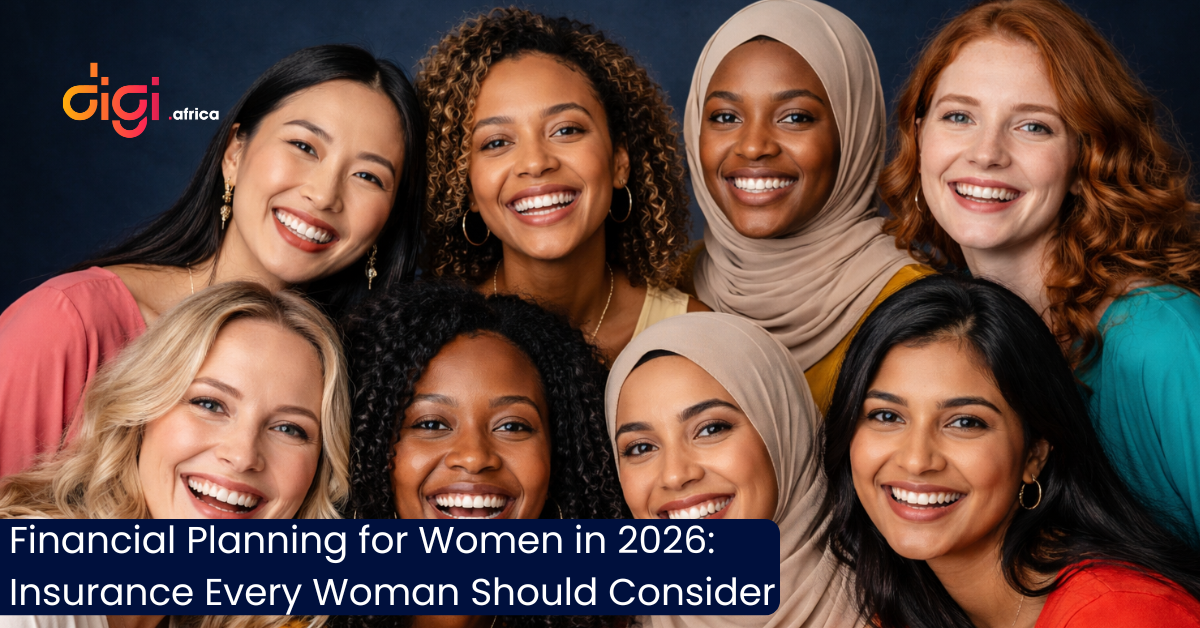
Why Financial Planning for Women Is Different in 2026
Financial planning isn’t gender-neutral. In 2026, women face a unique set of economic variables that require a tailored approach to insurance.
Longer Life Expectancy
According to the latest 2026 data, a Kenyan woman at age 65 can now expect to live until at least 79 years old. While living longer is a blessing, it also means your money has to last longer. Women need to plan for a longer “sunset phase” where medical costs are higher and active income is lower.
Career Breaks & Income Gaps
Whether it’s taking time off for maternity leave or stepped-back career years to care for aging parents, women often experience “income gaps.” These gaps don’t just affect your monthly salary; they affect your pension contributions and your ability to build a consistent emergency fund. Insurance acts as a bridge during these periods.
Rising Healthcare Costs in Kenya
While the government has made strides with the Social Health Insurance Fund (SHIF), private healthcare costs in Nairobi and other major cities continue to climb. A private hospital stay that cost KSh 100,000 in 2022 can easily exceed KSh 150,000 today. For a woman managing a household or a business, these costs are a major threat to stability.
Increased Entrepreneurship
With 93% of Kenyan women now identifying as entrepreneurs or considering starting a business, the line between personal and business finances has blurred. If you are the “engine” of your business, what happens to that business if the engine needs a repair?
1. Medical Insurance
Medical insurance is the “bread and butter” of your financial plan. While the SHIF provides a basic safety net, a Private Medical Cover is essential for women who want choice, speed, and specialized care.
What it covers:
- Specialist Consultations: Faster access to gynecologists, endocrinologists, and dermatologists.
- Maternity Benefits: Comprehensive covers for both normal and C-section deliveries (private rates for a C-section now often exceed KSh 250,000).
- Preventive Screenings: Annual Pap smears, mammograms, and bone density tests.
Why it matters for women: Women generally use healthcare services more frequently than men due to reproductive health needs and higher rates of autoimmune conditions. In 2026, many insurers have introduced “Women’s Wellness” riders that specifically cover fertility treatments and mental health support, areas often neglected in standard policies.
2. Life Insurance: Protect the People Who Depend on You
There is a common myth that only the “breadwinner” needs life insurance. In reality, every woman who provides value, whether financial or through care, needs it.
Who needs it most in 2026?
- The Entrepreneur: To ensure your business debts don’t pass to your family.
- The Single Mother: To guarantee your children’s education (School Fees Protectors).
- The “Sandwich Generation” Woman: Those supporting both children and elderly parents.
What it protects: Life insurance provides a lump sum that can pay off outstanding mortgages, fund your children’s university education, or provide a monthly “salary” for your dependents. It transforms a potential family tragedy into a manageable transition.
3. Critical Illness Cover: Offers Protection During Major Diagnoses
If medical insurance pays the doctor, Critical Illness Cover pays you. This is a standalone policy or a rider that gives you a lump-sum cash payout upon the diagnosis of a major illness like cancer, stroke, or heart disease.
Why this is crucial for women: In Kenya, Cervical Cancer (23.8%) and Breast Cancer (7.3%) remain the most prevalent cancers among women. While SHIF has reduced the cost of chemotherapy sessions, the “hidden costs” of cancer, special diets, loss of work, and travel for treatment, can run into millions.
Example: If you have a Critical Illness cover of KSh 2 Million and are diagnosed with Stage II Breast Cancer, the insurer hands you the KSh 2 Million. You can use it to fly for a second opinion, pay your rent while you recover, or clear your business loans.
4. Income Protection Insurance
Often called the “most overlooked cover,” Income Protection is designed to replace a percentage of your monthly earnings if you are unable to work due to illness or an accident.
Why it’s the “Entrepreneur’s Best Friend”: For the self-employed woman, if you aren’t working, you aren’t earning. Unlike an employee who might have “sick leave” days, a business owner faces a total stop in cash flow. Income protection ensures that even if you are bedridden for six months, your personal bills, and your children’s school fees, are still paid.
Insurance Planning Checklist for Women in 2026
Use this checklist to audit your current financial “foundation”:
- Comprehensive Medical: Do I have a cover that allows me to visit my preferred private hospital?
- Maternity/Wellness: Does my cover include annual screenings like mammograms?
- Life Cover: If I passed away tomorrow, would my children stay in the same school?
- Critical Illness: Do I have at least KSh 1 Million set aside for a “worst-case” diagnosis?
- Income Protection: Could I survive financially if I couldn’t work for 6 months?
- Policy Review: Have I updated my beneficiaries (especially after marriage, divorce, or birth)?
Common Mistakes Women Make in Financial Planning
- Relying Only on Employer Insurance: Company covers are often basic and disappear the moment you leave your job. Always have a personal “backup” policy.
- Buying the Cheapest Policy: In insurance, you get what you pay for. A cheap policy with 20 hidden exclusions is more expensive than a premium policy that actually pays claims.
- Ignoring Income Protection: We tend to insure our cars (which lose value) but fail to insure our ability to earn (our most valuable asset).
- Delaying Life Cover: Life insurance is cheapest when you are young and healthy. Waiting until you are 45 can double or triple your premiums.
How to Choose the Right Insurance in 2026
- Assess Your “Human Capital”: How much would it cost to replace your income or the work you do at home?
- Compare Benefits, Not Just Premiums: Look at the “limits” for things like chronic ailments or oncology.
- Understand the Exclusions: Every policy has a “What We Don’t Cover” section. Read it before you sign.
- Work with a Licensed Advisor: Don’t just buy a policy off a website. Speak to an advisor who understands the specific needs of women in the Kenyan market.
FAQs (Frequently Asked Questions)
- Is life insurance necessary for single women? Yes. Even if you don’t have children, life insurance can cover your final expenses, clear any outstanding debts (like car loans or Sacco loans), and even serve as a long-term savings tool if it is a “Whole Life” or “Endowment” policy.
- What is the best medical insurance for women in Kenya? The “best” varies by budget, but in 2026, look for providers that have strong maternity sub-limits, partnerships with major women’s hospitals, and a seamless digital claims process.
- How much critical illness cover do I need? A good rule of thumb is to have a payout equal to at least one year of your current gross income. This gives you the breathing room to focus on recovery without financial stress.
- Can self-employed women get income protection insurance? Absolutely. In fact, insurers in 2026 have designed specific products for the “Gig Economy” and SMEs that only require 6 months of bank statements or audited accounts as proof of income.
Conclusion
Financial planning for women isn’t just about earning more; it’s about protecting what you’ve already earned. Being a “financially savvy woman” means recognizing that you are your own greatest asset. By securing the right medical, life, and income protection covers, you aren’t just buying a policy, you are buying peace of mind and a guaranteed future for yourself and your loved ones.
Are you ready to build your foundation?
Would you like me to help you calculate exactly how much insurance premiums you would need based on your current monthly expenses and family goals? Give us a call and Felix will help you out.