

How Much Does a Last-Minute Trip Cancellation Really Cost?
Introduction
Most travelers spend months budgeting, tracking ticket prices, and planning itineraries down to the last detail. They focus entirely on the cost of booking a trip. Very few think about the cost of not taking it.
Whether it’s an unexpected family issue, a sudden medical emergency, a corporate crisis, or a stressful visa delay, life rarely waits for our holiday calendars to clear. Canceling a trip at the eleventh hour doesn’t just crush your holiday plans, it can devastate your wallet.
Higher ticket prices, rigid provider terms, and rising international travel costs mean that walking away from a booked itinerary is a highly expensive move. Before you click “book” on your next getaway, it is vital to understand the true financial impact of last-minute cancellations and how travel insurance in Kenya can safeguard your hard-earned investments.
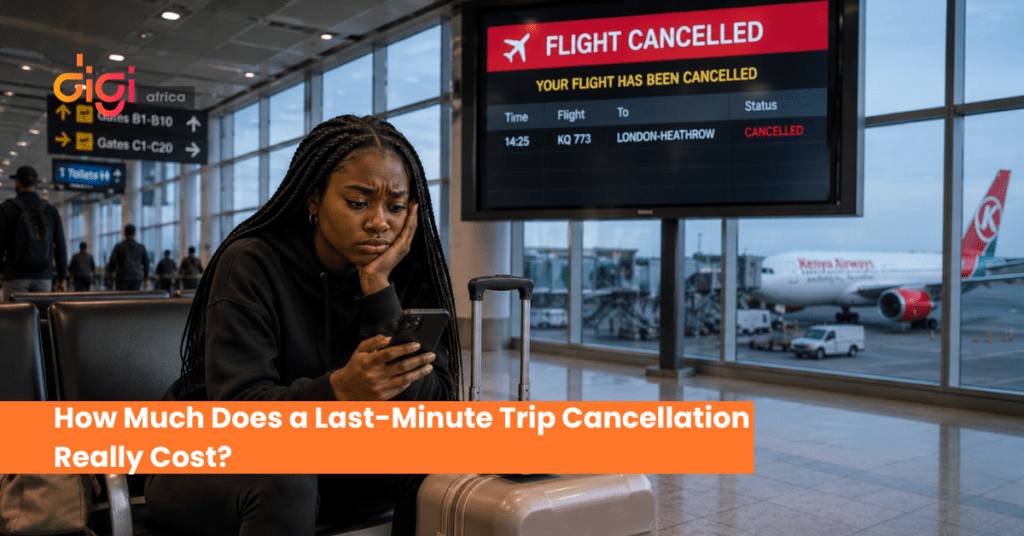
Why Last-Minute Trip Cancellations Happen
Nobody logs onto an airline app or speaks to a travel agent planning to abort their journey. Yet, every day, thousands of travelers are forced to cancel trips for reasons completely outside their control.
Kenyan travelers navigating domestic and international destinations commonly face several major disruption triggers:
- Sudden Illness or Injury: A severe bout of malaria, food poisoning, or an accidental fracture a few days before departure can render you medically unfit to fly.
- Family Emergencies: The unexpected critical illness or sudden loss of an immediate family member requires you to stay behind.
- Visa Delays or Denials: This is a massive, relatable pain point for anyone holding a Kenyan passport. With processing times for Schengen, UK, and US visas remaining highly unpredictable, missing documents or delayed passport returns frequently break travel timelines.
- Unavoidable Work Obligations: A sudden corporate acquisition, an urgent court date, or an unexpected restructuring at work can freeze your leave approval instantly.
- Geopolitical and Natural Factors: Sudden travel advisories, political instability at your destination, or severe weather conditions (like delayed flights due to heavy seasonal rains or flooding) can make travel impossible.
The Hidden Costs of Canceling a Trip Without Travel Insurance
A common, costly misconception among travelers is that canceling a trip simply means losing your flight ticket, or that airlines and hotels will kindly refund your money out of goodwill. In reality, modern global booking engines are built to protect the provider’s bottom line, not yours.
The losses pile up across multiple distinct layers:
1. Non-Refundable Flights
Standard economy and promotional tickets are explicitly structured as 100% non-refundable. If you cancel, the airline keeps the base fare. Even if your ticket allows for modifications, high change fees paired with steep fare differences often make rebooking almost as expensive as buying a new ticket entirely. Generally, the only funds you can legally claw back from an unused ticket are basic airport taxes and local government fees.
2. Accommodation Penalties
To secure lower rates, many travelers opt for “Advance Purchase” or “Non-Refundable” hotel options. If you cancel at the last minute during peak holiday seasons (such as Christmas in Diani or July in the Maasai Mara), luxury resorts and safari lodges enforce strict penalty windows. Canceling within 7 to 14 days of your check-in date almost universally carries a 100% penalty fee.
3. Pre-Paid Tours, Excursions, and Safaris
High-value lifestyle travel experiences are incredibly unforgiving. Gorilla trekking permits, hot air balloon safaris, pre-booked local flights, and multi-day guided tours have zero-refund policies due to highly limited daily allocations. Once booked, that capital is locked.
4. Visa Processing Fees
Embassy and visa processing application fees are non-refundable from the second your documents hit the counter. Whether your visa is granted, delayed past your flight date, or denied entirely, that money is completely gone.
A Real-Life Loss Breakdown If Not Insured
To understand how these independent lines of credit collapse into a major financial disaster, let’s look at a realistic scenario.
Consider a family of three residing in Nairobi who booked a highly anticipated 7-night holiday abroad. Due to a sudden medical emergency exactly one week before departure, they are forced to cancel everything.
The financial wreckage of their unprotected trip unfolds as follows:
| Expense Category | Prepaid Cost (KES) | Provider Cancellation Policy | Actual Financial Loss (KES) |
| Return Flights (Family of 3) | KES 350,000 | Non-refundable economy promo fare | KES 310,000 (Taxes returned) |
| Boutique Hotel Stay (7 Nights) | KES 180,000 | Cancelled within the strict 7-day penalty window | KES 180,000 (100% forfeiture) |
| Pre-booked Guided Day Excursions | KES 60,000 | Non-refundable within 48 hours of service | KES 60,000 |
| Embassy Visa Application Fees | KES 45,000 | Universally non-refundable by the embassy | KES 45,000 |
| Airport Transfer Shuttles | KES 15,000 | Free cancellation up to 24 hours in advance | KES 0 (Successfully saved) |
| TOTALS | KES 650,000 | KES 595,000 |
Within a matter of minutes, this household loses over half a million shillings with absolutely nothing to show for it but added emotional stress.
Why Trip Cancellations Hurt More Today
Leaving your travel budget exposed is riskier than ever before. Driven by global fuel adjustments and inflation, the baseline cost of flights and international lodging has risen significantly. When the initial booking cost goes up, the financial stakes of losing that reservation multiply.
Furthermore, global travel providers have tightened their terms and conditions to insulate themselves from market volatility. Free, flexible booking windows are now a premium luxury rather than a standard courtesy, meaning unshielded travelers bear the full financial brunt of any change in plans.
How Travel Insurance Safeguards Your Investment
This financial vulnerability is exactly why smart travelers treat a travel insurance policy as a non-negotiable step of their booking process. Leading local underwriters offer powerful travel cancellation expenses protection built directly into their comprehensive plans.
A solid policy acts as a comprehensive financial shield across multiple fronts:
- Trip Cancellation Cover: If an eligible, unforeseen event (like a sudden illness or acute injury) forces you to call off your trip before departure, the policy reimburses your non-refundable, prepaid out-of-pocket losses.
- Trip Curtailment / Interruption: If a disaster hits during your trip, such as a serious family emergency back home or a medical crisis abroad, curtailment cover pays for your same-class return ticket home and reimburses the unused portion of your pre-paid hotel stay.
- Emergency Medical Alignment: Your medical safety and cancellation safety work together. If a physician certifies that you are too ill to board a flight, that medical validation acts as the approved trigger for your cancellation claim.
What Travel Insurance May Not Cover
To manage your expectations effectively, it is crucial to understand that travel insurance is an emergency safety net, not a blank check for fluid plans.
- “Change of Mind” Exclusions: Standard travel policies will never pay out simply because you decided you no longer want to go, or because your personal plans shifted voluntarily.
- Pre-Existing Medical Conditions: Unless you explicitly declare a chronic condition upfront and secure a specialized waiver, cancellations triggered by pre-existing illnesses are generally excluded.
- Predictable or Known Events: You cannot buy a travel policy to cover a cancellation caused by a massive storm or an active political advisory that was already widely broadcasted in the news before you purchased the insurance.
Practical Tips to Reduce Losses Before You Travel
- The “Golden Rule” of Timing: Always buy your travel insurance policy the exact same day you pay your flight deposit or hotel booking fee. The policy costs exactly the same whether you buy it three months before travel or three days before travel. Buying it early gives you free protection for the critical weeks leading up to departure.
- Pay for Strategic Flexibility: When booking accommodations, choose the rate that allows free cancellation up to 24 or 48 hours before arrival, even if it costs slightly more than the non-refundable rate.
- Audit Your Exclusions: Read through the policy wording carefully. Ensure you know the exact steps and documents (like official police abstracts or certified medical forms) required to file a successful claim.
Final Thoughts
Canceling a long-awaited trip is emotionally draining. Watching hundreds of thousands of shillings vanish alongside your holiday plans makes it incredibly painful.
As global travel costs continue to rise, leaving your travel capital exposed is a gamble you don’t need to take. A reliable travel insurance policy typically costs only a tiny fraction of your overall trip value, yet it protects 100% of it. By turning a potentially devastating financial loss into a minor, structured inconvenience, the right coverage ensures you can plan your next adventure with true peace of mind.
FAQ Section
-
How much money can I lose by canceling a trip?
You can lose up to 100% of all prepaid, non-refundable expenses, including flight tickets, hotel deposits, safari excursions, and visa fees, if you are forced to cancel your itinerary at the last minute without insurance.
-
Does travel insurance cover trip cancellation?
Yes. Comprehensive travel insurance plans explicitly include trip cancellation and curtailment benefits to reimburse you for non-refundable out-of-pocket losses, provided the reason for cancellation is covered by your policy text.
-
What reasons are covered under trip cancellation insurance?
Standard covered reasons typically include unexpected personal illness or severe injury, the death or critical hospitalization of an immediate family member, severe weather disruptions, or sudden travel supplier insolvency.
-
When should I buy travel insurance?
The ideal time to buy travel insurance is immediately after making your initial trip deposits or booking your flights. This ensures you are fully protected against unexpected events that could disrupt your plans before your departure date.
-
Can I get a refund on my visa fees if I cancel my trip?
No. Government and embassy visa application fees are universally non-refundable once processed, regardless of whether your trip is canceled, delayed, or if the visa is ultimately denied.
-
Protect Your Next Journey
Don’t leave your hard-earned travel investments exposed to life’s unpredictable emergencies. Secure your peace of mind before you fly.
Explore Comprehensive Travel Insurance Plans Today