
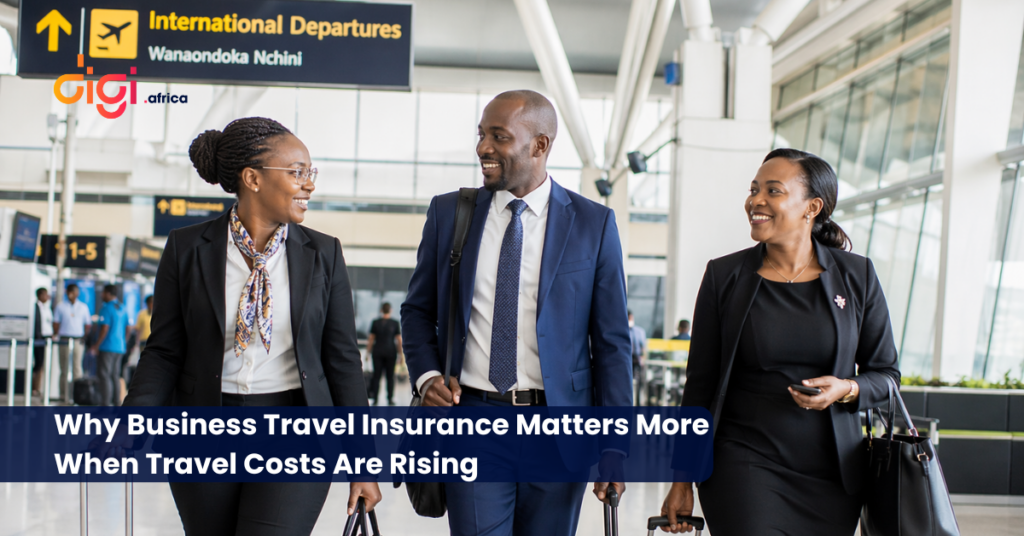
Why Business Travel Insurance Matters More When Travel Costs Are Rising
Introduction
In the corporate world, the “business trip” has undergone a profound transformation. We are no longer in the era of casual fly-in, fly-out meetings. As global business travel spend hits a staggering $2 trillion this year, every boarding pass issued by a company represents a high-stakes financial investment and makes business travel insurance very important.
For many SMEs and growing corporations, the stakes are even higher. With airfares projected to rise by nearly 4% and hotel rates climbing by 6% due to labor shortages and energy costs, the “cost of failure” for a business trip has never been more expensive. When a key executive is grounded by a flight cancellation, or an employee faces a medical emergency in a foreign city, the financial ripple effect can disrupt an entire quarterly budget.
Business travel insurance is no longer just a checkbox for the HR department; it is a critical tool for Travel Risk Management (TRM) and financial predictability. This guide explores why, in an environment of rising costs, corporate travel insurance is the ultimate hedge against volatility.
1. Why Business Travel is a “High-Risk Asset”
In the past, travel was often viewed as an operational expense. Today, it is managed like a high-risk investment. According to recent outlooks, 80% of SMEs expect their travel budgets to grow because in-person relationships remain the primary driver of sales and long-term partnerships.
However, this growth comes with a price tag:
- The “Non-Refundable” Trap: To keep budgets manageable, many companies opt for non-refundable corporate rates. While this saves money upfront, it leaves the company 100% exposed if the trip is canceled.
- Aviation Ancillaries: Airlines have unbundled their services. Rebooking fees, baggage charges, and seat assignments now account for a significant portion of the “real” cost of a flight.
- The Opportunity Cost: A canceled meeting isn’t just a lost flight; it’s a lost contract.
Business travel insurance acts as a “stop-loss” mechanism. It ensures that if the trip doesn’t happen, the company recovers the capital to try again, rather than simply absorbing the loss.
2. The Rising Cost of Being Unprotected
To understand the ROI of business travel insurance, look at the “hidden” costs of a disruption in the example scenario below.
| Scenario | Cost Without Insurance (Out-of-Pocket) | Cost With Corporate Policy |
| Medical Evacuation (London to Nairobi) | $50,000 – $100,000 | Covered |
| Last-Minute Rebooking (Hub Disruption) | KSh 150,000+ | Covered |
| Canceled Conference (KSh 500k prepay) | KSh 500,000 Loss | Reimbursed |
| Lost Professional Equipment (Laptop/Camera) | KSh 250,000 | Covered |
3. The “Duty of Care” Mandate
“Duty of Care” has moved from a moral suggestion to a legal framework. For businesses, especially those with international aspirations, the responsibility to protect employees doesn’t end at the office door.
The Employer’s Responsibility
If you send an employee to a trade fair in Dubai or a partnership meeting in New York, you are legally and ethically responsible for their safety. In a world of increasing geopolitical fragmentation and climate-driven travel risks, the “foreseeable harm” an employee might face has grown.
- Safety & Security: If civil unrest breaks out or a natural disaster occurs, a corporate policy provides the infrastructure for emergency evacuation.
- Mental Health & Well-being: Traveling is stressful. Modern policies now include 24/7 “Emotional Support” helplines to help travelers manage the anxiety of delays and foreign environments.
Failing to provide adequate travel insurance doesn’t just put the employee at risk; it opens the company up to significant liability lawsuits if a preventable tragedy occurs without a safety net in place.
4. The Medical Reality
A common mistake SMEs make is assuming their local corporate medical cover extends globally. The transition to the Social Health Authority (SHA) has clarified one thing: public health benefits are strictly domestic.
Even private medical insurers often have “regional” or “international” limits that are woefully inadequate for high-cost regions like North America or Europe.
- The Admission Barrier: Foreign private hospitals often require a Guarantee of Payment (GOP) from a recognized international insurer before they will even admit a patient.
- The Cost Surge: International medical inflation is currently tracking at 8-10%. A single night in an ICU abroad can cost more than an entry-level employee’s annual salary.
Corporate travel insurance bridges this gap, providing “Unlimited” or very high-limit travel medical cover that ensures your team gets the best care without bankrupting the company.
5. Cyber Crime and “Hush Trips”
The risk landscape of has introduced two new challenges that traditional travel insurance didn’t always cover:
1. The Cyber-Travel Risk
Business travelers carry sensitive company data. While traveling, they are prime targets for cyber-theft via public Wi-Fi or device theft.
- Insurance Response: Advanced business travel policies now include Cyber-Assistance, helping employees secure their devices and providing coverage for the costs associated with data breaches or hardware replacement while on the road.
2. The Rise of “Hush Trips”
With the normalization of remote work, more employees are taking “Hush Trips”, traveling to a foreign destination to work without explicitly notifying their HR department.
- The Crisis: When a “Hush Trip” goes wrong (e.g., a medical emergency in a location the company didn’t approve), the legal and insurance complexities are immense.
- The Solution: A robust corporate annual policy can often be negotiated to cover “flexible working” locations, provided certain safety protocols are followed, giving both the employee and the employer peace of mind.
6. How Business Travel Insurance Protects Business Continuity
When an employee is stranded, the “work” doesn’t just stop, it breaks. Business travel insurance protects the continuity of operations in three key ways:
- Replacement Colleague Cover: If your lead negotiator falls ill before a million-dollar pitch, some premium corporate policies will pay for a replacement colleague to fly out and take their place, covering the last-minute airfare and accommodation.
- Tech Continuity: If a laptop is stolen, the insurance doesn’t just pay for the hardware; it can facilitate the delivery of a rental device to the traveler’s hotel so they can finish their presentation.
- Real-Time Rerouting: AI-driven insurance platforms monitor global flight data. If a strike is detected in Frankfurt, the policy assistance team can proactively rebook your employee through a different hub before they get stuck in the terminal.
7. How To Choose the Right Corporate Travel Insurance Policy
For HR managers and business owners, selecting a policy requires a more granular approach than simply looking at the premium.
1. Single Trip vs. Annual Multi-Trip (AMT)
- SMEs: If your team takes more than three international trips a year, an Annual Multi-Trip policy is almost always more cost-effective. It covers all employees (or a specific group) for any number of trips during the year.
- Benefit: It removes the admin burden of buying a policy every time someone books a flight.
2. Specific Industry Riders
- NGOs: Ensure the policy includes “Search and Rescue” and covers “High-Risk” zones if you operate in volatile regions.
- Tech/Marketing: Ensure the limits for “Business Equipment” are high enough to cover professional-grade laptops and cameras.
3. Direct Payout Capability
In a currency-volatile environment, you want an insurer that pays the hospital or airline directly. Asking an employee to “pay and claim back” KSh 500,000 is often impossible and creates immense financial stress.
8. Common Corporate Misconceptions About Travel Insurance
- “Our Credit Card covers the team.”
The Reality: Most corporate credit cards have “incidental” cover. They have low medical limits, high deductibles (excess), and often only cover the cardholder, not the entire team traveling together.
- “Travel Insurance is too expensive.”
The Reality: The average annual corporate policy costs roughly 0.5% to 1.5% of a company’s total travel spend. Compared to a $100,000 medical evacuation bill, it is the most affordable risk-mitigation tool in your budget.
9. Strategic Travel in a Volatile World
Business travel is an engine for growth, but it is an engine that operates in an increasingly unpredictable environment. As travel costs rise, the “margin for error” shrinks.
By investing in business travel insurance, you aren’t just buying a policy; you are building a resilient corporate culture. You are telling your employees that their safety is a priority, and you are telling your shareholders that the company’s budget is protected against global chaos.
Don’t let a single travel disruption derail your company’s growth. Protect your team, your budget, and your business continuity today.
Protect Your Team and Travel Budget
Ensure your employees travel safely and your business stays protected in the high-cost environment.
Get a Corporate Travel Insurance Quote for Your Business Today
Frequently Asked Questions: Business Travel Insurance
1. Do companies need business travel insurance?
Yes. Beyond the financial protection, it is a key component of an employer’s “Duty of Care” legal obligation to ensure employee safety abroad.
2. What does corporate travel insurance cover that personal insurance doesn’t?
Corporate policies often include “Replacement Colleague” cover, higher limits for business equipment, and coverage for “Hush Trips” or remote work flexibility.
3. Is employee medical insurance valid abroad?
Most local medical schemes have very limited or zero international coverage. A dedicated travel policy is essential for access to global private healthcare.
4. How much does business travel insurance cost?
Annual policies for SMEs are highly competitive, often starting from a few hundred dollars per year to cover multiple employees, depending on the frequency and destination of travel.