
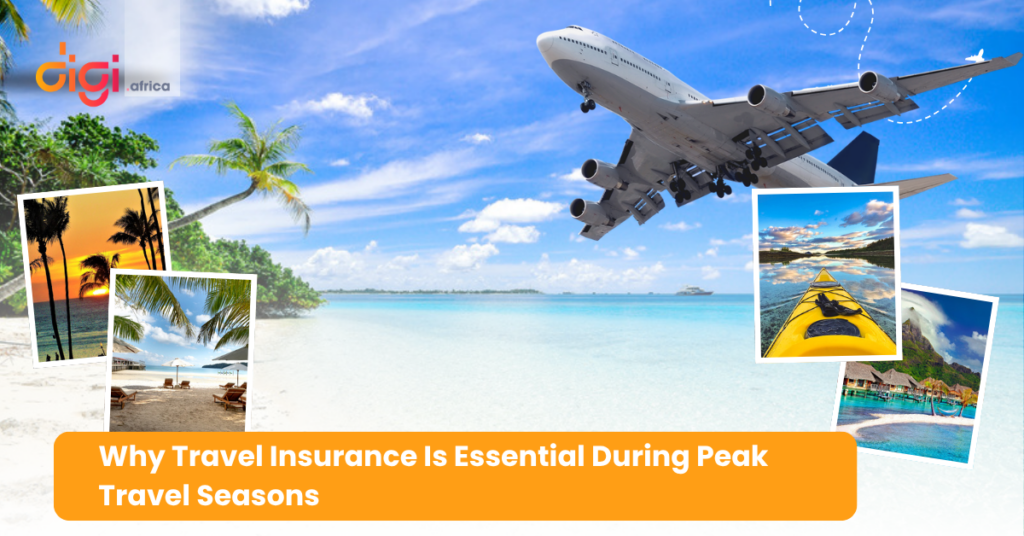
Why Travel Insurance Is Essential During Travel Seasons
Introduction
Whether you are planning a grand December getaway to the white sands of Diani, a quick Easter hop to Dubai, or a bucket-list summer tour through Europe, the excitement is palpable. Airports are buzzing, the Maasai Mara is teeming with life, and your Instagram feed is likely a non-stop carousel of boarding passes and sunset vistas.
However, there is a flip side to the peak season coin. As millions of people move across the globe simultaneously, the systems that support travel, airlines, hotels, hospitals, and baggage handlers, are pushed to their absolute breaking point. In this high-pressure environment, the “Importance of travel insurance” shifts from being a footnote in your budget to being the most critical document in your suitcase.
In this guide, we’ll explore why travel insurance isn’t just a “nice-to-have” add-on, but a foundational requirement for anyone navigating the beautiful chaos of peak travel seasons.
What Are Peak Travel Seasons?
“Peak season” refers to the periods when travel demand is at its highest. In Kenya and across the globe, these typically include:
- The December Holidays: Christmas and New Year’s remain the busiest weeks of the year globally.
- Easter Break: A high-intensity window for family travel and religious pilgrimages.
- School Holidays: Specifically July and August, when families take advantage of the long break.
- Major Global Events: In 2026, events like the FIFA World Cup or major international trade summits can turn a “regular” month into a localized peak season.
The Reality of Peak Travel: More travelers mean more pressure. When every flight is 100% full and every hotel room is booked, there is zero “buffer” for error. If a flight is canceled during a low-traffic Tuesday in November, you might be on the next plane three hours later. If it happens on December 23rd, you might be stuck for three days.
Why Travel Risks Increase During Peak Seasons
The math is simple: more people equals a higher probability of disruptions. Here is why the risks skyrocket during busy periods.
1. Increased Flight Delays and Cancellations
Airlines maximize their fleets during peak seasons. Planes spend less time on the tarmac and more time in the air. While this is great for availability, it creates a “Ripple Effect.”
- Operational Pressure: If a plane in London has a minor mechanical issue, it delays the flight to Nairobi, which in turn cancels the return flight to London. Because there are no spare aircraft (they are all in use), the schedule collapses.
- Overbooking: Airlines often overbook flights assuming a certain percentage of “no-shows.” During holidays, everyone shows up. This leads to “bumping” passengers, often leaving them stranded without immediate alternatives.
2. Higher Risk of Lost or Delayed Baggage
Ground handling crews at major hubs like JKIA, Heathrow, or Dubai International are often overwhelmed during peak periods.
- The Logistical Strain: When a terminal designed for 10,000 people suddenly handles 20,000, suitcases get misrouted.
- The Impact: Arriving in a cold climate for the holidays only to find your luggage (and all your warm clothes) decided to take a solo vacation to a different continent is more than an inconvenience, it’s a crisis.
3. Medical Emergencies in High-Traffic Zones
During peak seasons, tourist hotspots become crowded.
- The Cost Factor: Foreign healthcare providers often charge premium rates in tourist areas. Without International travel insurance, you could be required to pay a massive cash deposit before a hospital even admits you for an emergency.
- Evacuation: If you are in a remote safari camp or a crowded island, getting to a high-quality medical facility during a peak period can be difficult and expensive without a dedicated assistance team.
What Travel Insurance Covers During Peak Periods
A comprehensive travel insurance policy acts as your “Get Out of Jail Free” card when the travel system fails you.
-
Emergency Medical Expenses
- Hospitalization: Covers the cost of stay, surgery, and medication.
- Outpatient Care: For those unexpected bouts of food poisoning or minor injuries.
- Emergency Evacuation: Pays for the air ambulance or specialized transport to get you to the right doctors.
-
Trip Cancellation and Interruption
During peak seasons, you’ve likely paid “Peak Rates” for your hotels and flights. Most of these are non-refundable.
- Cancellation: If you or a close family member gets sick a week before your trip, the insurance reimburses your non-refundable costs.
- Interruption: If you have to cut your trip short and fly home early, the policy covers the new flight and the “lost” nights at your hotel.
-
Baggage Loss and Travel Delays
- Baggage Delay: Provides cash to buy essentials (toiletries, basic clothing) while you wait for your bags.
- Baggage Loss: Compensates you for the total value of your lost items.
- Travel Delay: Pays for meals and hotel stays if your flight is delayed for more than a specified number of hours (usually 6–12 hours).
-
Personal Liability Abroad
If you accidentally injure someone or damage property while on holiday (e.g., a skiing accident or knocking over an expensive display in a shop), your insurance covers the legal fees and damages.
Real Cost Comparison: Insurance vs. Disruptions
To understand the benefits of travel insurance, you have to look at the numbers. This is just an example to show how travel insurance can help in case of an emergency. Different insurance providers have different premiums.
| Scenario | Cost Without Insurance (Approx.) | Cost With Insurance |
| ER Visit in the USA | KSh 250,000+ | KSh 0 (minus excess) |
| Last-minute flight home | KSh 150,000 (Peak rates) | Covered |
| Lost Suitcase (Full contents) | KSh 100,000+ | Reimbursed |
| Policy Premium (Kenya) | N/A | KSh 4,000 – 7,000 |
The Value Proposition: Spending KSh 5,000 to protect a KSh 300,000 holiday is a 1.6% “safety tax.” It is the most logical financial decision a traveler can make.
Who Needs Travel Insurance Most?
- Families: With kids in tow, the risk of a sudden fever or a lost bag of “must-have” items is much higher.
- Students: Those traveling for studies often have limited budgets; an unexpected medical bill can end an academic year prematurely.
- Business Travelers: Time is money. If a delay causes a missed meeting, insurance helps recover the costs of rebooking.
- Frequent Flyers: If you travel more than 3 times a year, an Annual Multi-Trip policy is often more cost-effective.
Common Mistakes Travelers Make
- Buying Insurance Too Late: If you buy insurance after a storm is named or an airline announces a strike, you aren’t covered for that event. Buy your policy the moment you book your flight.
- Assuming Airline Compensation is Enough: Airlines are only liable for very specific amounts (set by international treaties like the Montreal Convention). They will rarely pay for your missed hotel nights or medical bills.
- Choosing the Cheapest Cover: Not all policies are equal. Some “cheap” covers have tiny limits for medical emergencies ($10,000 is not enough for a serious incident in Europe or the US).
- Not Reading Exclusions: Most policies won’t cover “extreme sports” (like skydiving) unless you add an extra rider.
How to Choose the Right Travel Insurance Policy
Before you buy travel insurance, check these five points:
- Destination: Does the policy cover the specific countries you are visiting? (Note: Some policies exclude the USA/Canada unless specified).
- Medical Limits: Aim for a minimum of $50,000 for regional travel and $100,000+ for international travel.
- Activities: Does it cover the activities you have planned (hiking, scuba diving, etc.)?
- COVID-19/Pandemic Cover: While we are in 2026, many insurers still include (or exclude) pandemic-related cancellations. Check the wording.
- 24/7 Assistance: Ensure the insurer has a global emergency number you can call at any time.
Final Thoughts
Busy travel seasons bring unforgettable experiences, but they also bring unpredictable risks. When the airports are packed and the system is under strain, your travel insurance policy is the only thing that stands between a “travel horror story” and a “manageable inconvenience.”
Don’t let a lost bag or a 12-hour delay ruin your holiday. Travel smart, stay protected, and focus on making memories, not managing crises.
Frequently Asked Questions
- Is travel insurance necessary for holiday travel?
While not always legally mandatory (except for certain visas like the Schengen visa), it is functionally necessary. It protects you from the high costs of cancellations and medical emergencies that are common during busy periods.
- When should I buy travel insurance?
As soon as you make your first non-refundable payment (like your flight or hotel deposit). This ensures you are covered for “Trip Cancellation” before you even leave home.
- What does travel insurance cover?
The core pillars are Medical Emergencies, Trip Cancellation/Interruption, Baggage Loss/Delay, and Personal Liability.
- How much does travel insurance cost?
In Kenya, for a one-week international trip, premiums typically range between KSh 3,500 and KSh 8,000, depending on your destination and age.
- Can I buy travel insurance after booking a trip?
Yes, you can buy it any time before you depart. However, you won’t be covered for any events (like a strike or weather event) that were already “known” or announced before you bought the policy.
Before your next trip, make sure you’re protected from unexpected travel disruptions. Don’t wait until you’re at the boarding gate to think about your safety.
Get a Travel Insurance Quote for Your Next Journey Today