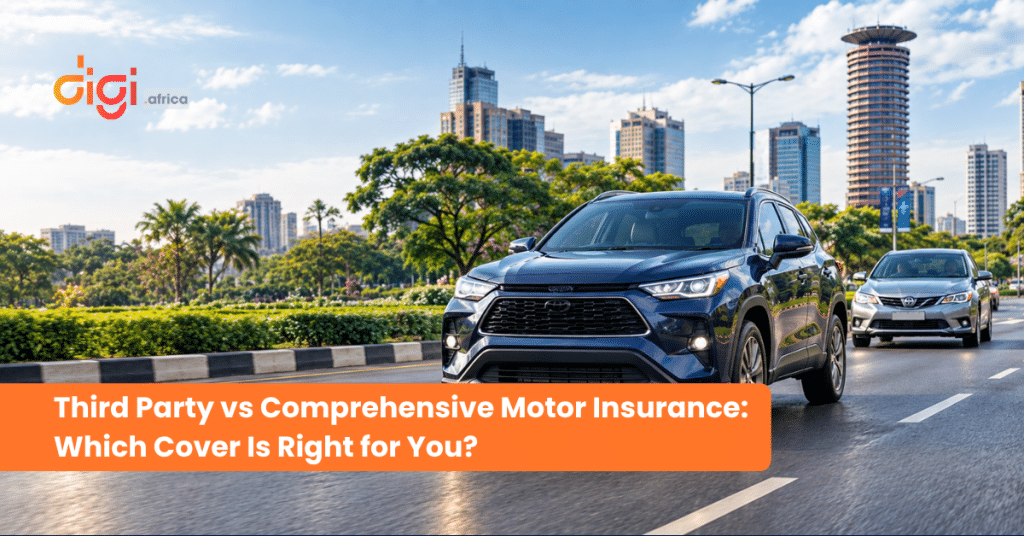
Third Party vs Comprehensive Motor Insurance: Which Cover Is Right for You?
Introduction
When buying a car or renewing your motor insurance in Kenya, one of the first decisions you face is selecting the right type of cover. Many motorists hear the phrase “comprehensive insurance” and assume it is the default, legally required standard for all vehicles on the road.
In Kenya, however, there is a clear distinction between what is required by law and what is optional: third-party motor insurance is the statutory minimum required cover, while comprehensive motor insurance is an optional, broader form of protection.
According to regulations enforced by the Insurance Regulatory Authority (IRA) under the Insurance (Motor Vehicles Third Party Risks) Act (Cap 405), every vehicle operating on public roads in Kenya must maintain valid third-party liability cover at a minimum. Comprehensive insurance, while widely recommended for newer or high-value vehicles, builds upon that foundation to protect your own asset.
Understanding the structural differences between these two options helps you evaluate whether basic third-party protection satisfies your legal and financial requirements, or whether the additional safety net provided by comprehensive insurance is worth the investment.
What Is Third-Party Motor Insurance?
Third-party motor insurance is the entry-level motor insurance cover available in Kenya and serves as the baseline statutory requirement.
- Focus of Cover: Third-party insurance focuses strictly on covered liability owed to other people (third parties) resulting from an accident involving your vehicle.
- What It Pays For: It provides protection for covered third-party claims involving bodily injury or death to pedestrians, passengers, or occupants of other vehicles, as well as damage to third-party property (such as another person’s car, fence, or roadside infrastructure), subject to applicable laws and policy terms.
- What It Excludes: A basic third-party-only policy generally provides no cover for loss or damage to your own vehicle, regardless of who caused the accident.
Key Takeaway: If you drive a motor vehicle on Kenyan roads, holding a valid third-party insurance certificate is mandatory to comply with traffic laws. However, third-party insurance does not cover everything that happens in an accident; claims are strictly subject to policy terms, statutory limits, and proven liability.
What Is Comprehensive Motor Insurance?
Comprehensive motor insurance offers broader financial protection by combining third-party liability coverage with first-party protection for your own vehicle.
Depending on the specific underwriter policy, a comprehensive motor insurance policy generally combines:
- Protection for covered accidental loss or damage to your own vehicle.
- Statutory third-party liability protection for bodily injury, death, and property damage caused to others.
- Coverage for other specified perils, primarily theft of the vehicle and accidental fire damage.
Important Clarification: “Comprehensive” does not mean every conceivable loss or scenario is automatically covered. The exact scope of protection depends on:
- Specific policy wording and defined insured risks.
- Standard policy exclusions (e.g., driving under the influence, mechanical breakdown, unroadworthy tires, or unlicensed drivers).
- Policy limits and applicable excess/deductibles.
- Specific optional extensions selected at the time of purchase (such as Excess Protector or Political Violence and Terrorism cover).
Third Party vs Comprehensive: What’s the Difference?
To easily compare the two primary motor insurance covers in Kenya, review the breakdown below:
| Feature / Coverage Aspect | Third-Party Insurance | Comprehensive Motor Insurance |
| Legally required minimum in Kenya? | Yes (Mandatory under Cap 405) | No (Optional under law) |
| Third-party bodily injury & death liability | ✓ Covered (Subject to policy terms) | ✓ Covered (Subject to policy terms) |
| Third-party property damage liability | ✓ Covered (Subject to policy limits) | ✓ Covered (Subject to policy limits) |
| Accidental damage to your own vehicle | ✗ Generally Not Covered | ✓ Covered (Subject to policy terms) |
| Vehicle theft or attempted theft | ✗ Generally Not Covered | ✓ Covered (Subject to policy terms) |
| Fire damage to your vehicle | ✗ Generally Not Covered | ✓ Covered (Subject to policy terms) |
| Level of financial protection | Basic / Statutory minimum | Broader / Multi-risk protection |
| Annual Premium Cost | Generally lower (Fixed standard fee) | Generally higher (Percentage of vehicle value) |
| Main Consideration | Meeting legal requirements and covering liabilities owed to others. | Minimizing out-of-pocket exposure to repair or replacement costs for your own vehicle. |
Note: Coverage terms and policy wording vary between IRA-registered insurance companies in Kenya. Always review the specific policy schedule, exclusions, limits, and excess structure before committing to a cover.
What Does Third-Party Insurance Cover?
Third-party insurance protects you against legal liabilities arising from claims made by other parties. Under standard Kenyan motor policies approved by the IRA, coverage includes:
- Third-Party Bodily Injury and Death: Financial indemnity against legal liability if your vehicle causes bodily injury or death to pedestrians, cyclists, passengers, or occupants of other vehicles.
- Third-Party Property Damage: Financial coverage for damage caused by your vehicle to third-party properties, such as another motorist’s vehicle, private structures, or municipal property, up to the policy limit.
- Legal Fees: Coverage for legal costs incurred when defending covered third-party liability claims, subject to underwriter consent.
What Is Missing?
Third-party-only cover does not pay to repair your own car following an accident, nor does it compensate you if your car is stolen, vandalized, or destroyed by fire.
What Does Comprehensive Motor Insurance Cover?
Comprehensive cover provides multi-risk financial security for both your vehicle and third parties. Potential areas of coverage under a standard Kenyan comprehensive policy include:
- Accidental Damage: Costs to repair your vehicle following a collision, overturn, or accidental impact.
- Theft and Vandalism: Financial compensation or vehicle replacement if your car is stolen or damaged during an attempted theft.
- Fire Damage: Coverage for partial or total loss resulting from accidental fires, explosion, or lightning.
- Third-Party Liabilities: Includes all standard third-party injury, death, and property damage coverage.
- Optional Policy Extensions: Insurers in Kenya offer optional add-ons to enhance a comprehensive policy, including:
- Excess Protector: Waives the standard excess fee you would otherwise pay when submitting a claim.
- Political Violence and Terrorism (PVT): Protects against damage caused by riots, strikes, civil commotion, or acts of terrorism.
- Loss of Use / Courtesy Car: Provides a temporary rental vehicle while your car is in the repair shop following an accident.
- Windscreen and Entertainment Unit Limits: Increases the maximum payable benefit for damaged glass or audio equipment.
What Happens If You Only Have Third-Party Cover?
To understand how this works in practice, consider a common real-world scenario:
Scenario: You are driving in Nairobi traffic and accidentally rear-end another car. Both your front bumper and the other driver’s rear bumper suffer significant damage. The cost to repair the third party’s car is KES 85,000, while repairs to your own car will cost KES 110,000.
- With Third-Party Only Cover: Your insurer will assess and settle the KES 85,000 claim to repair the other driver’s vehicle (the third party). However, your insurer will pay KES 0 toward your car’s repair. You must pay the full KES 110,000 repair bill for your own vehicle out of pocket.
- With Comprehensive Cover: Your insurer manages and pays for both repair bills, settling the third-party claim and repairing your vehicle (less any applicable policy excess).
If you maintain only third-party cover, you assume full responsibility for funding your own repairs or absorbing the total loss if your car is written off or stolen.
When Might a Third-Party Cover Be Enough for You?
Third-party insurance is a practical and legal choice for many drivers in Kenya. It may suit your needs if:
- Your primary goal is meeting legal requirements: You want basic legal compliance to drive on Kenyan roads without incurring traffic fines.
- Your vehicle has a low market value: If your vehicle is older or highly depreciated, the annual cost of a comprehensive premium plus policy excess may approach a significant percentage of the car’s actual value.
- You can absorb repair costs: You have personal savings set aside and feel comfortable carrying the financial risk of repairing or replacing your own car if an accident occurs.
- The vehicle is rarely driven: Vehicles used infrequently or kept in low-risk environments may not warrant the expense of a comprehensive premium.
Note: Vehicle age and market value are key factors to evaluate, but they should be considered alongside your personal financial ability to handle unexpected repair bills.
When Might Comprehensive Cover Make Sense?
Selecting broader comprehensive cover makes sense when protecting your vehicle asset outweighs the cost of the higher premium. Consider comprehensive cover if:
- Your car has significant financial value: Replacing or repairing a newer or high-value vehicle out of pocket would cause major financial strain.
- Your car is financed: Bank financing agreements require comprehensive insurance to secure the loan.
- The car is essential to daily life or business: If losing access to your vehicle would disrupt your employment, business operations, or family needs, comprehensive cover, especially paired with a Loss of Use extension, provides key security.
- You want protection against theft and non-collision damage: If you commute or park in areas where theft, vandalism, or flood damage are risks, comprehensive insurance covers these perils.
Don’t Choose Based on Premium Alone
When evaluating motor insurance, avoid basing your decision strictly on upfront costs. A lower premium does not necessarily represent better value if it leaves you exposed to heavy financial losses.
Instead of only asking, “Which policy is cheaper?” ask yourself: “How much financial risk am I taking on with each option?”
When comparing policies from underwriters, evaluate:
- Scope of Covered Perils: Does the policy protect against collision, theft, fire, and natural disasters?
- Policy Exclusions: What specific scenarios invalidate a claim under the policy terms?
- Excess / Deductible Structure: What percentage or fixed amount must you pay out of pocket when filing a claim?
- Third-Party Liability Limits: What is the maximum limit the policy pays for third-party property damage?
- Add-on Availability: Can you add key extensions like Excess Protector or Courtesy Car?
- Underwriter Reputation & Claims Efficiency: How quickly does the insurer process and settle claims?
The cheapest policy up front can quickly become the most expensive option if an uncovered incident occurs.
Understand Your Motor Insurance Policy Before You Need It
Before finalizing any motor insurance policy in Kenya, review these five core areas:
✓ What is covered? Confirm the exact insured risks specified in the policy schedule.
✓ What isn’t covered? Read the policy exclusions carefully (e.g., unauthorized drivers, commercial use on a private policy, or unroadworthy vehicles).
✓ What is my excess? Ensure you understand your financial contribution required at the time of a claim.
✓ What are the policy limits? Check limits for repair limits, glass damage, towing costs, and third-party liabilities.
✓ What is the claims process? Know how quickly an accident or theft must be reported to the insurer and police. Keep your insurance broker’s contact details readily accessible in your vehicle or phone.
Final Thoughts
There is no single “best” motor insurance policy for every driver in Kenya. Third-party insurance fulfills your legal duty under Kenyan traffic law while protecting you against liabilities owed to other road users. Comprehensive insurance offers broader financial security for those who want to safeguard their own vehicle asset against accidents, theft, and fire.
The right decision depends on your car’s market value, your daily vehicle usage, and your overall risk tolerance. Whichever level of cover you choose, the most critical step is ensuring you fully understand your policy terms, limits, and exclusions, before you ever need to make a claim.
Not Sure Which Motor Cover Is Right for You?
At Digi Africa, we help you compare motor insurance options and secure reliable cover from leading licensed underwriters across Kenya.
Talk to Felo & Get Covered today.
Frequently Asked Questions (FAQ)
1. Is third-party motor insurance mandatory in Kenya?
Yes. Third-party motor insurance is the statutory minimum legal requirement for any motor vehicle driven on public roads in Kenya under the Insurance (Motor Vehicles Third Party Risks) Act (Cap 405).
2. Is comprehensive motor insurance mandatory in Kenya?
No. Comprehensive motor insurance is not a general statutory requirement under Kenyan law. However, a financial institution or bank may contractually require comprehensive cover as a condition of a vehicle loan agreement.
3. What is the main difference between third-party and comprehensive insurance?
Third-party insurance covers liability for injury, death, or property damage caused to other people. Comprehensive insurance includes third-party liabilities while also covering damage to your own car, as well as theft and fire risks.
4. Does third-party insurance cover damage to my own car?
No. Basic third-party-only insurance does not cover accidental damage, theft, or fire losses affecting your own vehicle.
5. Does comprehensive insurance cover theft in Kenya?
Yes. Comprehensive insurance policies generally cover theft of the vehicle or damage caused during attempted theft, subject to specific policy terms, excess rules, and security requirements.
6. Is comprehensive insurance better than third-party insurance?
Not inherently, it depends on your circumstances. While comprehensive insurance provides broader protection, third-party insurance may be more practical for older, low-value vehicles where the cost of a comprehensive premium outweighs the car’s market value.
7. Can I legally drive with only third-party insurance in Kenya?
Yes. As long as you hold a valid third-party insurance certificate issued by an IRA-licensed underwriter, you are legally compliant on Kenyan roads.
8. How do I choose between third-party and comprehensive insurance?
Evaluate your vehicle’s current market value, whether the car is financed, your risk tolerance, and your financial ability to fund unexpected repairs or vehicle replacement out of pocket.
1 Comment
Why Motor Insurance Premiums Costs What It Does in Kenya
[…] Note: While third-party cover is legally mandatory for driving on public roads, comprehensive insurance is an optional broader form of protection unless required under a vehicle financing agreement. Get a better understanding by reviewing our guide that gets to compare Third-Party Insurance and Comprehensive Insurance in Kenya. […]