What Every Driver Should Know About Motor Insurance Excess In Kenya
Introduction
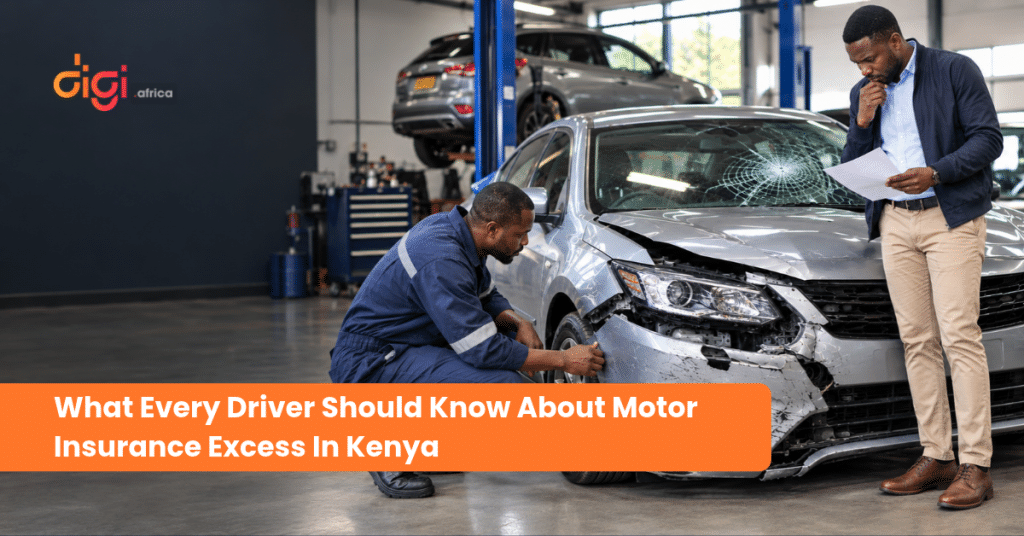
Imagine this scenario: you take out a comprehensive motor insurance policy for your car, drive with peace of mind, and pay your annual premium on time. Months later, your car suffers minor body damage in a parking lot collision. You report the incident, get a repair estimate from an approved garage for KES 60,000, and submit a claim, only to learn that you must pay KES 15,000 out of your own pocket before your insurer settles the balance.
For many motorists, discovering that comprehensive insurance does not automatically cover 100% of every repair bill comes as an unpleasant surprise.
Your premium is not the only financial figure you need to understand. While motor insurance provides vital financial protection, policies are structured subject to specific terms, conditions, and out-of-pocket contributions. Chief among these is the motor insurance excess.
Understanding how excess works in Kenya ensures you aren’t caught off guard when filing a claim and helps you evaluate whether a policy quotation truly fits your financial situation.
What Is Motor Insurance Excess?
Motor insurance excess is the pre-agreed amount or percentage a policyholder must contribute toward an eligible insurance claim. The exact amount, when it applies, and how it is calculated are specified in your policy schedule. Understanding your excess helps you estimate potential out-of-pocket costs before an incident occurs.
To understand excess, it helps to distinguish it clearly from your annual premium:
- The Premium: The upfront fee you pay to the insurance company to keep your insurance policy active.
- The Excess: The out-of-pocket contribution you pay toward repairs or loss only when you file an eligible claim.
A Simple Example
Suppose your vehicle suffers accidental damage and the approved repair bill comes to KES 100,000. If your policy schedule specifies an applicable excess of KES 10,000, the financial settlement breaks down simply:
- Total Approved Repair Bill: KES 100,000
- Your Excess Contribution (Paid by you): KES 10,000
- Insurer’s Contribution (Paid by insurer): KES 90,000
By requiring policyholders to bear a small portion of a loss, underwriters discourage small, frivolous claims (such as fixing minor scratches that cost less than the excess itself) and encourage careful vehicle maintenance and driving habits.
How Does Motor Insurance Excess Work in Kenya?
While specific claims procedures vary among underwriters in Kenya, the general process involving excess follows a standard sequence:
- Incident Occurs: Your vehicle is involved in an accident, theft, or covered loss.
- Notification & Assessment: You report the incident to the police (if required) and submit a claim form to your insurer or broker, along with repair estimates from an approved garage.
- Claim Evaluation: The insurer’s assessor evaluates the damage, verifies the circumstances under your policy terms, and approves the final repair figure.
- Excess Determination: The applicable excess amount is calculated based on your policy schedule (e.g., a fixed figure or a percentage of the total claim value).
- Settlement: Depending on the garage and insurer arrangements, you either pay your excess portion directly to the repair garage upon collecting your car, or the insurer deducts the excess amount from the final cash settlement payout.
What Types of Motor Insurance Excess Might Apply?
Not all excesses are structured identically. When reviewing motor insurance quotations in Kenya, you may encounter different excess arrangements.
1. Compulsory Excess
This is the mandatory base excess set by the underwriter’s underwriting criteria. It is a non-negotiable term of the policy and applies to standard eligible claims. In Kenya, compulsory excess for private comprehensive policies is often stated as a percentage of the vehicle’s value or claim amount, subject to a minimum fixed Shilling amount (for example, 2.5% of the vehicle value, minimum KES 15,000).
2. Voluntary Excess
In some policies, underwriters allow you to agree to a higher out-of-pocket excess in exchange for a reduction in your upfront annual premium. While opting for a voluntary excess can make your annual policy cheaper, you must be confident that you can comfortably pay that larger sum if an accident occurs.
3. Additional or Special Excesses
Underwriters may apply additional excess layers for specific high-risk scenarios or specific categories of drivers. Common examples specified in Kenyan policy schedules include:
- Young or Inexperienced Driver Excess: An additional excess charged if the driver at the time of the accident is under a certain age (e.g., under 25) or holds a novice driving license.
- Unauthorized or Unnamed Driver Excess: Applies if the vehicle is damaged while being driven by someone not registered as a named driver on the policy.
- Theft Excess: Some policies apply a higher excess percentage specifically for total vehicle theft claims compared to partial collision repairs.
Note: Always check your individual policy schedule and schedule of limits, as excess structures differ across insurance companies in Kenya.
When Might You Have to Pay Motor Insurance Excess?
Whether an excess applies depends on the nature of the claim and the specific wording of your policy document. Typical situations where an excess generally applies include:
- Accidental Collision Damage: Repairing damage to your own vehicle following a road traffic accident.
- Single-Vehicle Incidents: Damage resulting from hitting a stationary object, wall, or overturning.
- Vehicle Theft or Vandalism: Claims filed for total vehicle loss or damage following an attempted theft.
- Windscreen / Glass Replacement: Replacing a cracked windshield or window (though many comprehensive policies include a specific Windscreen Extension with a waived or lower excess up to a defined limit).
Does Motor Insurance Excess Apply to Third-Party Insurance?
It is important to distinguish between third-party liability claims and first-party damage claims:
- Third-Party Liability Claims: Claims filed by other people for bodily injury, death, or property damage caused by your vehicle.
- First-Party Claims: Claims filed to repair or replace your own vehicle.
Under standard Kenyan statutory Third Party vs Comprehensive Motor Insurance rules, third-party liability claims for third-party injury or property damage are managed according to statutory regulations and policy terms.
Because basic third-party-only insurance provides no coverage for your own car, you do not pay an excess for your own repairs under a third-party policy, you simply absorb the full repair cost yourself out of pocket.
How Does Excess Affect Your Motor Insurance Premium?
The relationship between your excess and your upfront premium is a key factor in understanding why motor insurance costs what it does in Kenya.
- Higher Applicable Excess: You accept a larger financial contribution during a claim. As a result, the underwriter’s risk drops, which can lead to a lower annual premium.
- Lower Applicable Excess: The insurer pays a larger portion of minor claims. As a result, the underwriter’s risk rises, which typically means a higher annual premium.
What Is an Excess Protector?
Many motorists in Kenya purchase an optional policy add-on known as an Excess Protector.
By paying an additional fee on top of your base premium, an Excess Protector waives or reduces the standard compulsory excess you would otherwise pay when filing a claim. While this increases your total premium upfront, it eliminates or significantly reduces out-of-pocket expenses when an accident happens.
What Happens If You Cannot Afford Your Excess?
If you file a claim after an accident but cannot pay the applicable excess specified in your policy schedule, the claims process can stall.
Because the garage will generally not release your repaired vehicle until your excess contribution is paid, being unable to afford your excess can leave your car stuck in a repair yard.
To prevent this situation:
- Review Your Policy Schedule Early: Always check the exact excess figures stated on your quotation or policy documents before signing.
- Match Excess to Emergency Savings: Ensure the compulsory excess amount is a figure you could realistically pay out of pocket on short notice.
- Ask Your Broker for Clarification: If an excess clause is unclear, ask your insurance broker to break down the exact amount before paying your premium.
5 Things to Check About Your Motor Insurance Excess
Before committing to a comprehensive motor insurance policy, run through this practical checklist:
- The Minimum Amount: What is the absolute minimum amount you must pay per claim (e.g., KES 10,000 or KES 20,000)?
- The Percentage Rate: Is the excess calculated as a percentage of the total vehicle value or a percentage of the repair bill?
- Special Circumstance Excesses: Are there extra excess fees for young drivers, theft, or nighttime incidents?
- Excess Protector Availability: Does the quotation include an Excess Protector add-on, and how much does it add to the premium?
- Sub-Limit Thresholds: Are windscreen replacements, towing fees, and entertainment systems subject to separate excess limits?
Understand Your Motor Insurance Policy Before You Need It
Choosing the right motor insurance is about finding the optimal balance between an affordable upfront premium and manageable out-of-pocket costs during a claim. Knowing your excess amount in advance ensures you can navigate an unexpected accident with confidence.
At Digi, we operate as your insurance broker. We help you look beyond the headline premium price, compare quotations from top-rated, IRA-licensed underwriters across Kenya, and understand every policy clause, including your excess, before you make a decision.
Have questions about your motor insurance excess or need help evaluating a quote?
Talk to Felo & Get Help Understanding Your Cover Today
Frequently Asked Questions
1. What is motor insurance excess in Kenya?
Motor insurance excess is the pre-agreed financial amount or percentage that a policyholder must pay toward an eligible claim, with the insurance company covering the remaining approved balance subject to policy limits.
2. Who pays the excess in a motor insurance claim?
The policyholder filing the claim pays the applicable excess amount. Depending on the insurer and garage arrangements, it is either paid directly to the repair garage upon collecting the car or deducted from the total cash settlement payout.
3. Is motor insurance excess the same as a premium?
No. The premium is the upfront fee you pay to keep your insurance policy active for the year. The excess is an out-of-pocket contribution paid only when you file an eligible claim.
4. When do I have to pay excess on comprehensive motor insurance?
You generally pay an excess when filing a claim for accidental damage, collision, theft, or fire affecting your own vehicle, as specified in your policy terms.
5. Can I get motor insurance with a lower excess?
Yes. You can choose policies with lower base excesses or purchase an optional Excess Protector add-on, which waives or significantly reduces your out-of-pocket contribution during a claim in exchange for a slightly higher upfront premium.
6. Does a higher excess mean a lower premium?
Generally, yes. Accepting a higher voluntary excess reduces the insurer’s financial risk on smaller claims, which often allows them to offer a lower annual premium. However, actual pricing depends on individual underwriter criteria.
7. Do all motor insurance policies have the same excess?
No. Excess structures, minimum amounts, percentages, and special conditions vary significantly among different insurance companies in Kenya. Always consult your policy schedule for exact figures.
8. Where can I find my motor insurance excess amount?
Your exact excess details are listed in your Policy Schedule, which is provided alongside your policy document when you purchase or renew your insurance. You can also ask your insurance broker to review these details with you.