Understand Your Premium: Why Does Motor Insurance Cost What It Does in Kenya?
Introduction
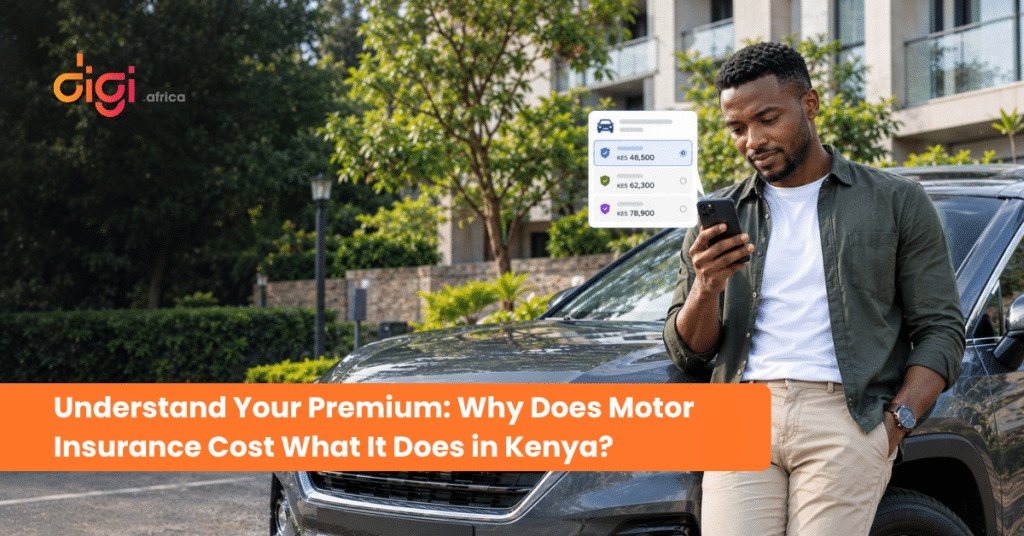
Imagine two colleagues working at the same company in Nairobi who both buy Japanese crossover SUVs of a similar engine size and year of manufacture. When the time comes to purchase car insurance, one receives a quotation for KES 38,000, while the other is quoted KES 52,000.
Situations like this leave many drivers asking: Why does motor insurance cost what it does in Kenya? Is the more expensive policy overpriced, or does the cheaper quote leave out essential protection?
Calculating motor insurance premiums involves much more than picking a random number out of thin air. An insurance premium is a carefully calculated financial figure that reflects the type of cover selected, the vehicle being insured, the specific risk factors involved, and the underwriting criteria of the insurance provider.
Understanding what you are paying for, and why premiums differ across quotes, is just as important as knowing the final price tag. This guide breaks down how motor insurance prices work in Kenya so you can evaluate quotations confidently and choose protection that truly fits your needs.
What Is a Motor Insurance Premium?
In simple terms, a motor insurance premium is the specified sum of money you pay to an insurance company in exchange for financial protection against covered vehicle losses, accidents, theft, or third-party liabilities.
It is important to distinguish your insurance premium from the routine operational costs of owning a vehicle, such as fuel, servicing, tire replacements, or parking fees:
- Operational Costs: Expenses incurred to keep your car running day-to-day.
- Insurance Premium: A financial risk-transfer fee. You transfer the heavy, unpredictable financial burden of a road accident, fire, or vehicle theft to an insurer in exchange for a predictable annual or installment payment.
In Kenya, total motor premiums also include mandatory statutory levies set by the government. These include the Training Levy (0.2% of basic premium), the Policyholders Compensation Fund Levy (0.25% of basic premium), and Stamp Duty (a nominal statutory charge).
Because every vehicle, driver profile, and insurance policy carries a unique combination of risks, premium amounts vary across policies and underwriters.
7 Factors That Influence Motor Insurance Premiums in Kenya
When an underwriter evaluates an application for motor insurance in Kenya, they consider several key factors to determine the basic premium rate.
1. The Type of Motor Insurance Cover You Choose
The broadness of the protection you select is the single largest driver of your premium cost.
- Third-Party Only Cover: This is the statutory minimum cover required by law under the Insurance (Motor Vehicles Third Party Risks) Act (Cap 405). It covers your legal liability for third-party bodily injury, death, or third-party property damage. Because it offers no financial protection for damage to your own vehicle, it carries a relatively low, broadly standardized basic rate.
- Comprehensive Cover: This provides broader protection, covering damage to your own vehicle alongside statutory third-party liabilities, theft, and fire risks. Because the underwriter assumes a higher financial risk, comprehensive cover carries a higher premium.
Note: While third-party cover is legally mandatory for driving on public roads, comprehensive insurance is an optional broader form of protection unless required under a vehicle financing agreement. Get a better understanding by reviewing our guide that gets to compare Third-Party Insurance and Comprehensive Insurance in Kenya.
2. Your Vehicle’s Make, Model, and Insured Value
For comprehensive insurance, the premium is calculated primarily as a percentage of the vehicle’s current market value (known as the Sum Insured). In Kenya, private comprehensive rates typically range from 3.5% to 5% of the car’s market value, depending on the underwriter.
Beyond value alone, the specific make and model play a major role:
- Spare Parts Availability: Popular models with widely available, reasonably priced spare parts in Kenya generally cost less to repair, leading to competitive premium rates.
- Repair Complexity: High-end luxury saloons or specialized performance vehicles require imported body parts and specialized dealership labor. Higher potential repair costs translate to a higher premium rate percentage.
3. The Vehicle’s Age and Physical Condition
As a car ages, its resale market value drops. Because comprehensive premiums track market value, the base premium for a comprehensive policy generally decreases each year upon renewal.
However, older vehicles introduce unique underwriting considerations:
- Minimum Premium Thresholds: Most Kenyan underwriters enforce a mandatory minimum basic premium (often ranging between KES 25,000 and KES 35,000 for private comprehensive policies) regardless of how low the car’s market value drops.
- Parts Sourcing & Condition: Vehicles older than 10 to 12 years may face higher rate percentages or specialized excess structures due to the scarcity of original spare parts or wear-and-tear considerations.
4. How the Vehicle Is Used
The intended purpose of the vehicle directly impacts its risk exposure on the road:
| VEHICLE USAGE CATEGORIES | |
|---|---|
| PRIVATE USE | Commuting & personal family errands (Standard baseline risk profile) |
| COMMERCIAL USE | Cargo, deliveries, & business goods
(Higher mileage & exposure) |
| PUBLIC SERVICE (PSV) | Taxis, ride-hailing, & matatus
(Highest passenger & road exposure) |
A car driven solely for personal weekend errands incurs less road exposure than a commercial delivery van or a vehicle registered for online ride-hailing services. Accurately disclosing your vehicle’s primary use during quotation is essential; misrepresenting commercial use as private use can invalidate your policy during a claim.
5. Risks Associated With the Vehicle’s Use and Location
Underwriters evaluate environmental and operational risks that surround a vehicle:
- Theft Exposure: Certain vehicle models frequently targeted by carjackers or spare-part syndicates may require mandatory anti-theft tracking devices before comprehensive cover is granted.
- Parking & Geographical Location: Vehicles parked overnight in secured, gated compounds present lower theft risks than cars routinely parked on unlit public streets.
6. Your Claims History and Underwriting Considerations
Your history as a driver influences pricing over time:
- No-Claim Bonus (NCB): If you complete a policy year without filing a claim, underwriters may reward you with an NCB discount on your renewal premium. This discount typically starts at 10% and can accumulate up to 30% or more over consecutive claim-free years.
- Frequent Claims History: Conversely, a history of multiple frequent claims may result in premium loading (a rate increase) or a higher mandatory excess structure upon renewal.
7. Policy Limits, Excesses, and Additional Benefits
The specific terms and optional add-ons included in your quotation alter the final price.
Key adjustments include:
- The Excess / Deductible: The out-of-pocket amount you agree to pay toward any claim. Opting for a higher voluntary excess lowers your annual premium, while requesting an Excess Protector add-on increases the premium slightly.
- Optional Add-On Benefits: Extensions such as Political Violence and Terrorism (PVT), Courtesy Car / Loss of Use cover, or raised limits for windscreens and entertainment systems increase the total cost.
Why Can Two Insurance Companies Quote Different Prices for the Same Car?
If you request quotes for the exact same vehicle from three different IRA-licensed insurers in Kenya, you will likely receive three distinct figures.
This price variation occurs because insurance companies operate with different underwriting strategies:
- Different Loss Statistics: One insurer may have experienced heavy claim losses on a specific vehicle model in recent years, prompting them to raise rates for that model. Another insurer may have had a cleaner claim history with the same model and can offer a lower rate.
- Variations in Standard Benefits: A higher quote from Insurer A might automatically include an Excess Protector, higher windscreen sub-limits, and complimentary roadside assistance. A lower quote from Insurer B might represent a bare-bones policy with high out-of-pocket excess fees and low benefit caps.
- Reinsurance and Capital Structures: Insurers manage their overall portfolio risk differently based on their corporate agreements with global reinsurers.
Always compare quotations on a like-for-like basis by checking sub-limits, excess amounts, and included extensions rather than evaluating the premium price in isolation.
Why Is Comprehensive Motor Insurance Usually More Expensive Than Third-Party Cover?
The price gap between third-party and comprehensive insurance stems directly from the scope of financial risk the insurer assumes.
Third-Party Only Insurance
- Covered Risks: Third-party injury, death, & property limits
- Financial Exposure for Insurer: Capped & specific
- Pricing Structure: Low, broadly standardized annual rate
Comprehensive Insurance
- Covered Risks: Third-party liabilities + Own car repairs + Theft + Fire + Vandalism + Windscreen
- Financial Exposure for Insurer: High (Up to full car value)
- Pricing Structure: Percentage of market value (3.5% – 5%)
Under a third-party policy, the insurer never pays a single Shilling toward repairing your vehicle. Under a comprehensive policy, a single accident can require the insurer to pay hundreds of thousands, or millions, of Kenya Shillings to repair or replace your vehicle.
Does a Higher Motor Insurance Premium Mean Better Protection?
Not necessarily. A higher price tag does not automatically guarantee superior cover or better service.
When reviewing car insurance prices in Kenya, evaluate policy quality using these six criteria:
- Scope of Included Perils: Does the policy protect against accidental damage, theft, fire, and natural disasters?
- Excess and Deductibles: What amount must you pay first when filing an eligible claim?
- Sub-Limits: What are the capped payout limits for windscreen replacement, car radios, or towing services?
- Exclusions and Restrictions: Are there strict geographical boundaries or restrictions on who is authorized to drive the vehicle?
- Garage Network: Does the underwriter maintain an approved network of reputable, high-quality repair garages near you?
- Claims Settlement Track Record: How efficiently does the underwriter process and settle valid claims?
A competitively priced policy with clear terms, a manageable excess, and a reliable claims track record offers far better value than an expensive policy burdened with rigid exclusions.
How Can You Make a More Informed Motor Insurance Decision?
Use this practical checklist when shopping for motor insurance in Kenya:
- Determine the Right Level of Cover: Decide whether statutory third-party cover or broader comprehensive protection fits your financial situation.
- Insure at True Market Value: Avoid over-insuring (which wastes money on inflated basic premiums) or under-insuring (which results in proportional payout penalties during a claim).
- Disclose Vehicle Details Accurately: State the exact make, model, year, and usage category (private vs. commercial) to ensure your policy remains valid.
- Compare Quotes Like-for-Like: Look beyond the final annual price, compare excess percentages, windscreen sub-limits, and included add-ons across at least three underwriters.
- Protect Your No-Claim Bonus: If you hold an existing claim-free record, ensure your agent or broker applies your earned NCB discount.
- Evaluate Out-of-Pocket Risk: Check the default excess clause and consider adding an Excess Protector if you want to avoid paying high out-of-pocket fees during a claim.
- Work With an IRA-Licensed Intermediary: Always purchase motor cover through licensed insurance companies or brokers registered with the Insurance Regulatory Authority (IRA).
Get a Motor Insurance Quote That Makes Sense for You
Navigating car insurance prices in Kenya doesn’t have to be confusing. At Digi Africa, we act as your trusted insurance broker, connecting you with tailored motor insurance options from top-rated, IRA-licensed underwriters across Kenya.
Our goal isn’t simply to push the cheapest quote, we help you understand policy terms, compare benefits side-by-side, and secure cover that protects both your vehicle and your bank account.
Not sure which motor cover fits your needs?
Talk to Felo & Explore Your Motor Insurance Options Today
Frequently Asked Questions (FAQ)
1. How are motor insurance premiums calculated in Kenya?
Comprehensive motor insurance premiums are calculated primarily as a percentage of the vehicle’s current market value (typically 3.5% to 5% for private cars), adjusted for usage, vehicle model, claims history, and selected add-ons. Statutory government levies (Training Levy, Policyholders Compensation Fund, and Stamp Duty) are added to the basic premium.
2. What factors affect car insurance prices in Kenya?
Key factors include the type of cover (third-party vs. comprehensive), the vehicle’s market value, make and model, usage category (private, commercial, or PSV), location, anti-theft security features, the owner’s claims history (No-Claim Bonus), and chosen policy excess limits.
3. Why does comprehensive motor insurance cost more than third-party insurance?
Comprehensive insurance costs more because it covers a broader range of financial risks, including accidental damage to your own vehicle, theft, fire, and vandalism, whereas third-party insurance only covers legal liabilities owed to other road users.
4. Can two insurers charge different premiums for the same vehicle?
Yes. Insurance companies use different loss statistics, risk assessment models, and overhead structures. Quotes may also differ because one policy includes extra benefits (such as Excess Protector or Courtesy Car) that another policy leaves out.
5. Does an older car always cost less to insure?
Not necessarily. While an older car’s market value is lower (which reduces the percentage-based premium), insurers enforce minimum basic premium thresholds. Additionally, if spare parts for an older model are rare, underwriters may apply higher rates or special excess conditions.
6. How can I find affordable motor insurance in Kenya?
You can secure affordable cover by insuring your car at its accurate current market value, protecting your earned No-Claim Bonus (NCB), selecting a manageable voluntary excess, installing approved anti-theft devices, and comparing quotes through an IRA-licensed broker.
7. Should I choose motor insurance based on price alone?
No. Selecting a policy based solely on the lowest price can leave you exposed to high out-of-pocket excesses, severe sub-limits on windscreen or towing costs, and rigid exclusions when filing a claim. Always compare protection levels, policy terms, and insurer reputations alongside the premium price.