

El Niño & Your Pet: Is Your Pet Ready for the Rains?
Introduction
Kenya is approaching the October–December short rainy season, and recent climate forecasts point toward an El Niño-influenced weather pattern. However, an El Niño event does not mean every region of Kenya will experience identical rainfall or extreme conditions.
For pet owners, the central question isn’t simply “Will it rain where I live?” but rather: What should I do differently if the rains become heavier, more frequent, or disruptive to daily routines?
Heavy or prolonged rainfall directly impacts where pets sleep, exercise, toilet, travel, and access medical care. Preparing their shelter, storing clean food and water, stocking necessary medications, assembling an emergency kit, and identifying local veterinary emergency contacts in advance will significantly reduce health risks and avoidable stress when heavy weather arrives.
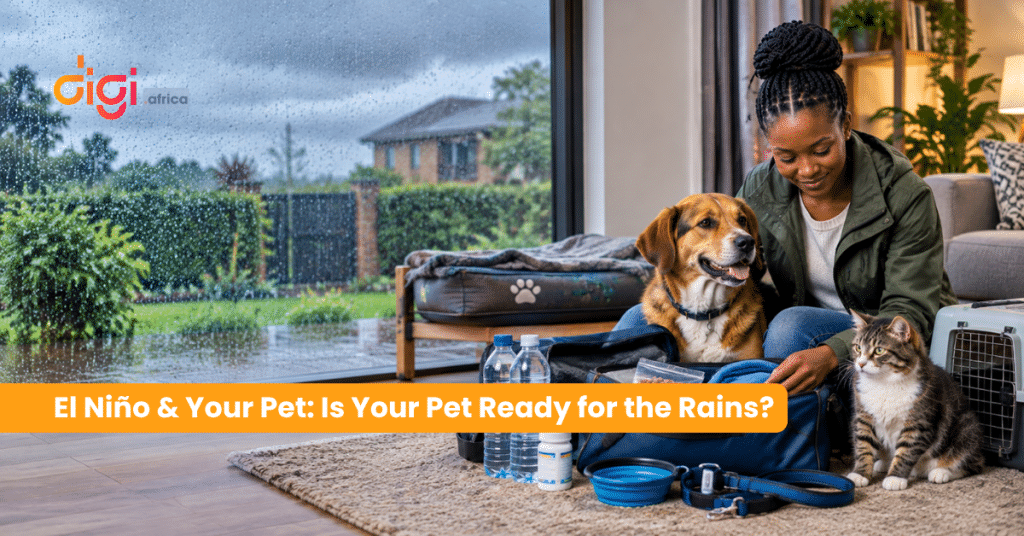
What is El Niño?
El Niño is a natural climate pattern characterized by abnormal warming of surface waters in the central and eastern tropical Pacific Ocean. This ocean-atmosphere interaction shifts global atmospheric circulation, influencing weather systems, rainfall intensity, and temperatures worldwide.
Because El Niño affects different geographical regions in distinct ways, its local impact varies significantly depending on terrain, elevation, and regional climate systems.
What Could El Niño Mean for Kenya?
In East Africa, El Niño climate patterns are frequently associated with above-average rainfall, particularly during the October-to-December rainy season.
For Kenyan households and pet owners, impacts may include:
- Heavier, localized downpours leading to flash flooding in flood-prone zones.
- Waterlogged compounds and standing water in suburban residential yards.
- Disrupted roads and transport networks, making simple travel across towns and cities slower or hazardous.
- Disruptions to outdoor routines, such as daily walks, outdoor play, and bathroom habits.
- Difficulty reaching essential services, including local veterinary clinics during severe storms or late at night.
It is inaccurate to state that El Niño directly causes specific animal diseases. Rather, persistent, heavy rainfall creates damp environmental conditions and standing water that increase a pet’s exposure to environmental hazards, waterborne pathogens, and disease vectors.
How Can Heavy Rains Affect Pets in Kenya?
Heavy rainfall affects dogs and cats across several physical and operational areas. Understanding these specific challenge areas helps you protect your pet proactively.
1. Wet and Cold Conditions
Prolonged exposure to rain, wet fur, and chilly drafts can cause significant discomfort, particularly for young puppies, kittens, senior pets, or short-haired breeds. When a pet’s coat remains damp, body temperature drops, forcing their immune system to work harder. Providing dry bedding and elevated, wind-protected shelter is essential.
2. Floodwater and Contaminated Water
Floodwater is never clean water. In many Kenyan towns and estates, heavy rains wash surface debris, sewage, agricultural runoff, and chemical contaminants into standing pools and open drainage systems.
- Chemical & Bacterial Hazards: Pets drinking or walking through floodwater risk ingesting harmful bacteria or chemical irritants.
- Physical Hazards: Submerged sharp objects, broken glass, unstable soil, and uncovered storm drains present immediate physical drowning and puncture risks.
3. Changes to Exercise and Outdoor Routines
When heavy downpours prevent regular walks, dogs can develop nervous energy, leading to destructive chewing, excessive barking, or stress. Cats that usually roam outside may become agitated when confined indoors. Setting up safe indoor enrichment activities and designating a covered, dry outdoor toilet area helps maintain routine stability.
4. Parasites and Wet-Weather Pests
Warm, humid, and wet environments accelerate the breeding cycles of ticks, fleas, and mosquitoes. Damp grass creates ideal conditions for internal parasites and intestinal worms, while muddy compounds can cause fungal infections or pododermatitis (paw pad inflammation).
5. Access to Veterinary Care
One of the most overlooked hazards during severe weather is the physical barrier to healthcare. Flooded roads, heavy traffic jams, downed trees, and nighttime travel hazards can delay access to a clinic during a medical emergency. Establishing a relationship with a local vet and identifying an emergency clinic before an urgent situation arises is critical.
8 Ways to Prepare Your Pet for the Rainy Season
Proactive preparation prevents panic when unexpected storms arrive. Follow these eight practical steps to safeguard your animals.
1. Create a Dry, Safe Shelter
- Outdoor Pets: Ensure kennels are raised off the ground to prevent water seepage. The roof must be completely waterproof, with side walls angled away from prevailing winds.
- Indoor Pets: Move pet bedding away from drafty doors, floor-length windows, or areas prone to roof leaks during heavy downpours.
2. Keep Food and Drinking Water Protected
Store commercial kibble, canned food, and dry treats in airtight, waterproof plastic containers elevated off the floor. Damp pet food quickly molds and attracts pests. Always maintain a stock of fresh, clean tap or filtered water stored in closed containers.
3. Prepare an Emergency Pet Kit
Assemble a dedicated, easy-to-grab emergency bag containing essential medical, nutritional, and comfort supplies for your pet. Keep this kit in a dry, easily accessible cabinet.
4. Know Your Nearest Veterinary Clinic
Don’t wait until your pet is injured or critically ill to search for emergency veterinary services in Nairobi or your local municipality. Save the contact numbers and physical addresses of both your regular veterinarian and a 24-hour emergency clinic in your phone contacts.
5. Keep Identification Details Updated
Storms, loud thunder, and heavy downpours can spook animals, prompting them to bolt through open gates or broken fences. Ensure your pet wears a durable collar with an legible ID tag containing your current phone number. If your pet is microchipped, verify that your contact details are updated with the registry.
6. Inspect Your Compound and Local Environment
Walk around your property before the heavy rains begin. Clear leaves from drainage grates, cover open pit latrines or deep drainage holes, fix loose fence wire, and move lawn chemicals or rat poisons to high shelves where floodwater cannot wash them into your pet’s reach.
7. Have an Emergency Transport Plan
If storm conditions disrupt public transport or standard roads, know how you will transport your pet safely. Keep a sturdy pet carrier accessible for cats and small dogs, and ensure you have a strong leash and harness for larger dogs. Identify transport options or emergency contacts who can assist if roads become difficult.
8. Understand What Your Pet Insurance Covers
Unexpected accidents, foreign object ingestion during indoor boredom, or sudden acute illnesses can occur during rainy weather. Review your pet insurance policy terms to understand how accident and illness claims are handled, including applicable waiting periods, limits, and deductible structures.
Pet Emergency Kit Checklist for the Rainy Season
Building a pet emergency kit ensures you are fully prepared for power outages, road closures, or sudden evacuation needs.
- Sealed Pet Food (3–5 Days’ Supply): Keeps nutrition safe from moisture, mold, and contamination during supply delays.
- Clean Drinking Water (3–5 Days’ Supply): Ensures safe hydration if local municipal water systems are disrupted or contaminated.
- Prescription Medications: Prevents interruption to ongoing veterinary treatments during extended weather disruptions.
- Sturdy Leash and Harness: Controls movement safely during evacuations or when walking near dangerous flooded drainage areas.
- Pet Carrier or Crate: Provides safe, stress-reducing containment for cats and small dogs during travel or temporary housing.
- Absorbent Towels and Blankets: Quickly dries wet coats to prevent hypothermia and keeps sleeping areas warm.
- Basic First-Aid Supplies: Contains bandages, antiseptic wipes, gauze, and saline solution to manage minor cuts or scrapes immediately.
- Veterinary Contact List: Guarantees instant access to your regular vet, emergency clinics, and local animal rescue contacts.
- Medical & Vaccination Records: Provides essential proof of health and vaccination history if visiting an alternative clinic or shelter.
- Recent Photo of Your Pet: Aids rapid identification and recovery if your pet escapes or becomes lost during a storm.
What to Do If Your Pet Is Exposed to Floodwater
If your pet accidentally walks through, swims in, or ingests floodwater, follow these safety-first steps:
- Move Your Pet to Safety Immediately: Guide or carry your pet away from floodwater, ensuring you do not put your own safety at risk in deep or fast-moving water.
- Prevent Them From Licking Their Coat: Do not allow your pet to groom or lick themselves while their coat is wet with floodwater.
- Thoroughly Rinse and Clean: Wash your pet’s coat, paws, and underbelly using clean tap water and mild pet shampoo. Pay close attention to paw pads and between toes where debris collects.
- Offer Fresh Drinking Water: Provide clean, filtered drinking water immediately so your pet is not tempted to drink from contaminated puddles.
- Monitor Closely for Illness Symptoms: Watch for signs of illness over the next 24 to 72 hours, including lethargy, vomiting, diarrhea, loss of appetite, or skin redness.
- Seek Veterinary Advice: If your pet shows any signs of distress, skin irritation, or gastrointestinal upset after flood exposure, contact your veterinarian promptly.
Does Pet Insurance Cover Problems Caused by Heavy Rain?
Pet insurance policies do not generally classify claims by weather event names like “El Niño” or “heavy rain.” Instead, coverage is evaluated based on the resulting condition, specifically whether the event constitutes a covered accident or illness under your policy terms.
How Coverage Generally Applies:
- Accidental Injuries: Medical expenses resulting from sudden physical injuries during a storm (such as a leg fracture from slipped footing, cuts from sharp submerged debris, or dog bites during storm-induced panic) are typically covered under standard accident policies, subject to policy limits and excess.
- Acute Illnesses: Veterinary treatment for sudden illnesses (such as severe respiratory infections or gastrointestinal distress from accidental ingestion of contaminated water) is covered if your policy includes illness coverage and any applicable waiting periods have passed.
- Policy Terms: Coverage, limitations and exclusions vary depending on the insurer and policy selected. Refer to the applicable policy wording for details.
Understanding your policy’s waiting periods, annual benefit caps, and co-payment terms before the rainy season begins ensures clear expectations when submitting a claim.
Pet Preparedness Considerations Across Various Regions in Kenya
Pet care during heavy rains requires localized practical adjustments depending on where you reside in Kenya:
- Nairobi & Urban Estates: Apartment pets in high-density areas may face restricted outdoor access. Set up indoor potty pads or turf trays, and watch out for overflowing storm drains along estate roads during evening walks.
- Gated Compounds & Suburban Homes: Inspect perimeter walls and automated gates. Heavy rains can erode soil beneath wall foundations, creating escape gaps for curious pets.
- Peri-Urban & Rural Holdings: Pets on larger acreage (e.g., outskirts of Nakuru, Eldoret, or Kisumu) face higher risks from deep mud, rising stream waters, and increased tick populations in tall, damp vegetation. Keep livestock guard dogs and outdoor pets sheltered away from natural drainage channels.
- Coastal Regions (MOMBASA & Malindi): High humidity combined with heavy rainfall increases the incidence of skin infections and hot spots in long-haired breeds. Ensure thorough drying after outdoor exposure.
Rainy-Season Pet Checklist
Use this quick list to confirm your household is fully prepared:
- Safe, dry sleeping area verified and elevated off damp ground
- Clean drinking water stored in sealed containers
- Minimum 3 to 5 days of pet food stocked in airtight containers
- Prescription medications fully stocked
- Primary veterinarian’s phone number saved in mobile phone
- 24-hour emergency veterinary clinic identified and contact saved
- Sturdy leash, harness, and collar with updated ID tag ready
- Pet carrier accessible and clean
- Compound inspected for open drains, loose fencing, and wash-away hazards
- Recent photo of your pet saved on your phone
- Emergency transport option identified
- Pet insurance policy details, limits, and claim forms reviewed
When Does Your Pet Need Veterinary Attention?
Online guides offer valuable preventative advice, but they cannot replace professional clinical diagnosis. Contact a qualified veterinarian immediately if your pet displays any of the following warning signs:
- Persistent vomiting or severe, watery diarrhea
- Extreme lethargy, collapse, or inability to stand
- Difficulty breathing, rapid shallow breathing, or persistent coughing
- Suspected ingestion of toxic chemical runoff, rat poison, or contaminated water
- Deep cuts, punctures, or bleeding from debris exposure
- Sudden swelling of joints, muscle weakness, or signs of severe pain
- Pale or muddy-colored gums
When in doubt about your pet’s health, consult a licensed veterinary professional directly.
Prepare Before You Need To
Preparing your pet for heavy rains is about more than securing extra kibble and extra blankets, it is about establishing a complete safety net that includes safe shelter, quick emergency transport, and financial readiness for medical emergencies.
Unexpected accidents or sudden illnesses during storm season can lead to urgent veterinary care. Having an active pet insurance plan ensures that when emergencies happen, your focus stays entirely on your pet’s health and recovery.
Want to explore flexible pet insurance options for your household? Connect with Felo today to find a policy tailored to your pet’s needs.
Frequently Asked Questions
-
Does El Niño directly affect pets in Kenya?
El Niño influences weather patterns, often bringing heavier and more frequent rainfall to Kenya. While it does not directly cause animal diseases, the resulting heavy rains, damp shelter conditions, and standing water increase a pet’s exposure to hazards, cold stress, and parasites.
-
How do I keep my dog safe during heavy floods?
Keep your dog indoors or in a secure, elevated area during severe storms. Never allow them to walk or swim in fast-moving floodwater or open drainage ditches. Always use a strong leash when taking them outside during rainy weather.
-
Should pets drink rainwater or floodwater?
Pets should never drink floodwater or stagnant surface puddles, as these frequently contain dangerous bacterial pathogens, chemical runoff, and parasite larvae. Always provide fresh, clean tap or filtered water in a clean bowl.
-
What should I keep in an emergency pet kit?
An emergency pet kit should contain a 3- to 5-day supply of food and water, prescription medications, a leash/harness, a carrier, absorbent towels, basic first-aid supplies, medical records, vet contacts, and a recent photo of your pet.
-
Does pet insurance cover accidents during heavy rain?
Yes, most comprehensive pet insurance policies cover treatment for eligible accidental injuries sustained during storm conditions, such as cuts, fractures, or trauma, subject to standard policy terms, waiting periods, and benefit limits.
-
Does pet insurance cover veterinary treatment for illnesses caused by bad weather?
If your policy includes illness coverage and the required waiting period has passed, treatment for acute, non-pre-existing conditions (like severe respiratory infections or sudden gastrointestinal illness) is typically eligible for reimbursement.
1 Comment
Pet Emergency Preparedness in Kenya: 8-Point Checklist
[…] In Kenya, seasonal shifts, particularly the onset of rainy seasons in April/May and September/October, present unique hazards for pets. Flash flooding, damp living quarters, and sudden cold snaps can lead to respiratory illnesses, skin infections, or straying animals. Always make sure you and your pet are prepared for the rainy season. […]