7 Things to Check Before Buying Motor Insurance in Kenya
Introduction
Imagine shopping around for motor insurance in Kenya, comparing two quotations for your car, and choosing the cheaper option to save KES 12,000 on your annual premium. Months later, a stray stone cracks your windshield on the highway.
You call your insurer to arrange a replacement, only to discover that your policy has a low windscreen limit of KES 30,000, and a replacement windscreen for your specific car model costs KES 75,000 out of pocket.
Choosing a policy based on the price tag alone is one of the most common mistakes motorists make. While securing an affordable premium is important, the headline price does not tell the full story. The actual protection you receive, the scenarios excluded from coverage, and the out-of-pocket costs you may still face are all hidden in the fine print of your policy document.
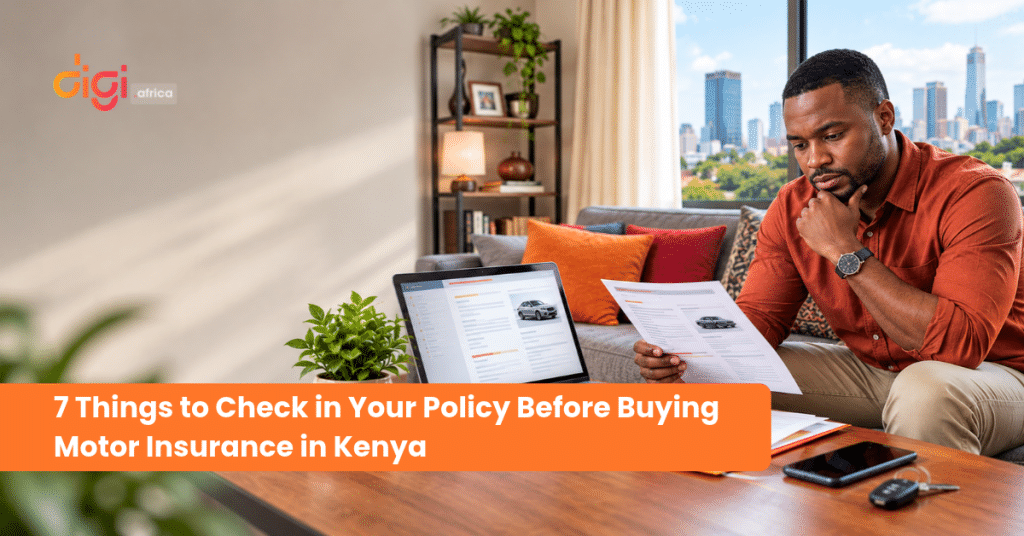
Before buying motor insurance in Kenya, check the type of cover (Third-Party vs. Comprehensive), policy exclusions, applicable excess fees, the vehicle’s insured value and benefit limits, the claims process, additional benefits (like Excess Protector or Loss of Use), and your policy renewal terms. Reviewing these seven points ensures you purchase genuine protection and avoid costly surprises during a claim.
Whether you are insuring a newly purchased vehicle, switching insurance providers, or renewing an existing policy, run through this practical 7-point checklist before making your payment.
1. Check the Type of Cover You Need
The first step in selecting motor insurance in Kenya is ensuring you buy the correct level of cover for your vehicle and financial situation.
- Third-Party Only Cover: This is the statutory minimum legal requirement under the Insurance (Motor Vehicles Third Party Risks) Act (Cap 405). It covers your legal liability for third-party bodily injury, death, or property damage caused by your vehicle. However, it provides zero financial protection for damage to or theft of your own car.
- Comprehensive Cover: This provides broader protection, combining statutory third-party liability coverage with first-party protection for your own vehicle against accidental collision damage, overturn, theft, fire, and vandalism.
While basic third-party cover keeps you compliant with Kenyan traffic laws, comprehensive cover protects your vehicle asset. Remember that comprehensive insurance is not a general statutory requirement for every driver in Kenya, though bank asset financing agreements will mandate comprehensive cover to secure a vehicle loan.
Select your cover type based on your vehicle’s market value, daily usage, and your ability to fund unexpected repairs out of pocket, not solely on which premium is cheaper. Learn more in our detailed guide on Third Party vs. Comprehensive Motor Insurance in Kenya.
2. Read the Exclusions Carefully
An insurance policy is a legal contract that defines not only what is covered, but also what is strictly excluded. Policy exclusions outline specific scenarios, activities, or conditions under which your insurer will deny a claim.
While exact exclusions vary among IRA-licensed underwriters in Kenya, common policy exclusions include:
- Unpermitted Vehicle Use: Using a car registered under a private motor policy for commercial hire, taxi services, or online ride-hailing app deliveries.
- Unlicensed or Unauthorized Drivers: Allowing someone without a valid Kenyan driving license (or an unlisted driver if the policy specifies named drivers) to operate the vehicle.
- Driving Under the Influence: Accidents occurring while the driver is impaired by alcohol or illegal drugs.
- Mechanical or Electrical Breakdown: Internal engine failure, wear-and-tear, or electrical glitches not caused by an external accident or impact.
- Unroadworthy Vehicles: Driving with smooth, bald tires or known structural defects that compromise road safety.
Never assume a risk is automatically covered simply because you have a comprehensive policy. Read the exclusions section in your policy schedule and ask your broker to clarify any unclear terms before signing.
3. Understand the Excess You May Have to Pay
Even with comprehensive insurance, filing a claim often requires an out-of-pocket contribution known as the motor insurance excess.
The excess is a pre-agreed amount or percentage that you pay toward an eligible repair or loss before your insurer covers the remaining balance.
- Compulsory Base Excess: Standard policies usually require a compulsory excess, often structured as a percentage of the vehicle’s value or repair bill (for example, 2.5% of vehicle value, minimum KES 15,000).
- Special Excesses: Additional excess percentages may apply if the driver is under 25, holds a novice license, or if the claim involves total vehicle theft.
- Excess Protector Add-On: You can often purchase an optional Excess Protector extension, which waives or reduces your compulsory excess contribution during a claim in exchange for a small addition to your upfront premium.
For a complete breakdown of how this works, read our article on Motor Insurance Excess Explained: What Every Driver Should Know.
Check the exact Shilling amount of your excess on your quotation. Ensure it is an amount you could comfortably pay out of pocket if an accident happens tomorrow.
4. Confirm the Vehicle’s Insured Value and Policy Limits
When taking out a comprehensive motor insurance policy in Kenya, the premium is calculated as a percentage of your car’s declared market value (Sum Insured). Confirming that this figure is accurate is essential.
- Over-Insuring: Declaring an unrealistically high value inflates your annual premium. In the event of a total loss, the insurer settles based on the car’s actual market value at the time of the accident, meaning the excess premium paid is wasted.
- Under-Insuring: Declaring a value lower than the true market price to secure a cheaper premium can trigger the “Average Clause” during a claim, resulting in your payout being proportionally reduced.
Additionally, check the specific sub-limits attached to individual policy benefits:
- Windscreen & Glass Limit: The maximum amount paid to replace damaged auto glass without affecting your No-Claim Bonus (NCB).
- Car Radio / Entertainment Unit Limit: The capped payout for stolen audio or electronic equipment.
- Towing & Recovery Limit: The maximum coverage provided to tow your disabled vehicle from an accident scene to an approved garage.
Verify that your car’s market value reflects current local pricing and ensure the windscreen and towing sub-limits match the realistic repair costs for your vehicle model. Understanding these factors will clarify why motor insurance costs what it does in Kenya.
5. Understand the Claims Process
When an accident occurs, you need a straightforward, fast claims process. Knowing your insurer’s required steps in advance prevents delays when you need help most.
Before paying for your policy, confirm the following details:
- Notification Deadlines: How many hours or days do you have to report an incident to the police and the insurer?
- Required Documentation: What paperwork is required (e.g., Police Abstract, copy of driving license, completed claim form, repair estimates)?
- Approved Repair Garages: Does the underwriter maintain a network of pre-approved garages near your location, or can you use a garage of your choice?
- Pre-Authorization Rules: Are repairs covered if started before an official insurance loss assessor inspects the car? (Hint: Insurers generally require official assessment before repairs begin.)
Save your insurer’s or broker’s emergency claims helpline number in your phone and keep a blank claim form and pen in your glove compartment.
6. Review Additional Benefits and Policy Conditions
Two comprehensive quotations with identical prices can offer vastly different protection depending on the optional extensions included.
Check whether your quotation includes these valuable policy add-ons:
- Political Violence and Terrorism (PVT): Covers loss or damage caused by riots, strikes, civil commotion, or acts of terrorism.
- Courtesy Car / Loss of Use: Provides a temporary rental vehicle or daily transport allowance while your car is undergoing approved accident repairs.
- Roadside Assistance: Offers 24/7 emergency support for flat tires, dead batteries, fuel delivery, or mechanical breakdowns.
- Medical Expenses Limit: A small built-in benefit that covers emergency medical treatment costs for occupants injured during a collision.
Compare quotes line-by-line. A slightly higher quote that includes Excess Protector, PVT, and Courtesy Car cover often delivers far better value than a bare-bones policy.
7. Check the Renewal Date and Policy Details
Before making your final premium payment, double-check all administrative details on your cover note or policy schedule for complete accuracy.
Verify the following key details:
- Vehicle Identification: Are the registration number, chassis number, engine capacity, and year of manufacture correct? (A single typo in your chassis number can stall a claim.)
- Policy Effective Dates: Does the cover start on the exact date and time you need it?
- Named Drivers & Usage: Is the vehicle usage correctly classified as Private, Commercial, or PSV?
- Renewal Terms: Mark your calendar for the policy expiry date. When renewing, review whether your vehicle’s market value has depreciated (which should lower your Sum Insured) and confirm that your earned No-Claim Bonus (NCB) discount has been applied.
Review your insurance policy schedule as soon as it is issued. Correcting administrative errors immediately avoids disputes during an emergency.
Your Motor Insurance Checklist Before You Pay
Use this quick summary checklist to review your motor insurance quotation before making a payment:
- 1. Cover Type: I have selected the appropriate cover (Third-Party or Comprehensive) for my needs.
- 2. Exclusions: I have read the policy exclusions and understand what scenarios are not covered.
- 3. Excess Amount: I know the compulsory excess figure and am prepared to pay it out of pocket if I file a claim.
- 4. Insured Value & Limits: My car’s market value, windscreen limit, and towing allowances are accurate.
- 5. Claims Procedure: I know how to report an accident, where the nearest approved garages are, and what documents are required.
- 6. Added Benefits: I have checked for add-ons like Excess Protector, PVT, Courtesy Car, and Roadside Assistance.
- 7. Accuracy & Dates: All vehicle registration details, chassis numbers, and policy dates are correct.
Get Help Understanding Your Motor Insurance Options
Navigating insurance jargon and evaluating fine print does not have to be frustrating.
At Digi Africa, we serve as your independent insurance broker. We help you compare motor insurance policies from top-rated, IRA-licensed underwriters in Kenya, breaking down complex policy terms so you know exactly what protection you are purchasing.
Ready to explore motor insurance options that fit your vehicle and budget?
Talk to Felo & Get Covered Today
Frequently Asked Questions (FAQ)
1. What should I check before buying motor insurance in Kenya?
Before buying motor insurance, check the type of cover (Third-Party vs. Comprehensive), policy exclusions, compulsory excess amounts, declared vehicle market value, sub-limits (for windscreens and towing), additional benefits (like Excess Protector), and the claims process.
2. Is comprehensive motor insurance mandatory in Kenya?
No. Comprehensive motor insurance is not a statutory legal requirement under Kenyan law. Basic Third-Party motor insurance is the legal minimum required to drive on public roads. However, banks and asset financing institutions require comprehensive insurance for financed vehicles.
3. What are common motor insurance exclusions?
Common exclusions include driving without a valid license, using a private vehicle for commercial hire or ride-hailing apps, driving under the influence of alcohol or drugs, mechanical/electrical breakdown, and driving an unroadworthy vehicle.
4. What is excess in motor insurance?
Motor insurance excess is the out-of-pocket amount or percentage a policyholder must contribute toward an eligible claim before the insurance company pays the remaining balance.
5. How do I know if my car’s insured value is correct?
Your car’s insured value (Sum Insured) should reflect its current local resale market value. You can verify this by checking current motor valuation reports or consulting a licensed motor valuer in Kenya.
6. What should I know about the motor insurance claims process?
Know the required reporting timeframe (usually within 24 to 48 hours), required documents (Police Abstract, driving license copy, claim form), and whether your insurer requires repairs to be done at an approved panel garage.
7. Can I change my motor insurance policy at renewal?
Yes. Upon annual policy renewal, you can adjust your vehicle’s insured value, add or remove optional extensions (like Excess Protector or Courtesy Car), update driver details, or switch to a different underwriter through your insurance broker.