

How to Prepare for Immigration Clearance When Traveling Abroad
Introduction
For many Kenyan travellers, the thought of standing in front of an immigration officer can cause a sudden spike in heart rate. Whether you are stepping up to the counter at Jomo Kenyatta International Airport (JKIA) for your first international flight, landing at London Heathrow for a business meeting, or arriving in Dubai for a family holiday, that yellow line on the floor can feel like a high-stakes barrier.
It is easy to feel intimidated, but it helps to understand the truth: immigration officers are not looking to trick you or catch you off guard. Their job is simply to verify your identity, confirm the legitimacy of your journey, and ensure you meet your destination’s legal entry requirements.
Because confident travellers prepare better, taking a proactive approach to organizing your documents and understanding the process is the ultimate way to eliminate airport anxiety. This guide breaks down the essential immigration tips for Kenyan travellers to ensure you sail through customs smoothly and start your journey on the right foot.
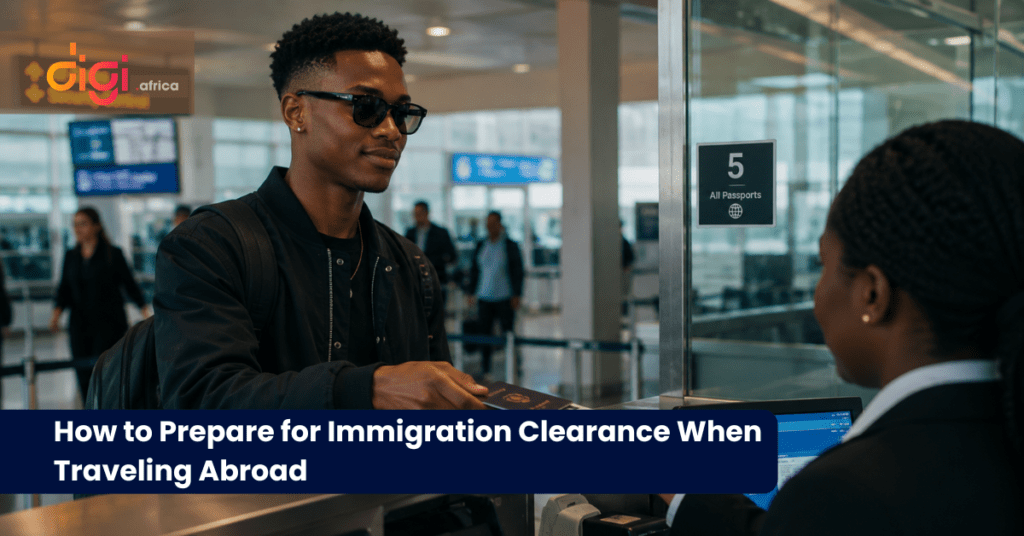
Why Preparation Matters Before You Reach the Booth
When it comes to international travel, confidence is not a character trait, it is the direct result of thorough preparation.
Arriving at an immigration counter with loose papers sticking out of your bag, or having to desperately search for your hotel confirmation on a phone with 2% battery, immediately creates stress. This disorganization can raise red flags for border control officers, leading to deeper questioning and unnecessary delays.
By contrast, when you approach the counter with a neat, organized physical folder containing every document an officer might ask for, you immediately project the image of a legitimate, responsible visitor. This level of preparation allows you to answer questions calmly, avoid secondary screening rooms, and transition smoothly into your destination.
What Immigration Officers Are Actually Looking For
To clear immigration with ease, you must understand the officer’s perspective. Regardless of which country you are visiting, every border control agent is looking to satisfy three basic questions:
- Are you who you say you are? (Identity verification via a valid, untampered biometric passport).
- What is the real reason for your visit? (Ensuring your stated purpose matches your visa class, for instance, making sure a tourist is not planning to look for illegal work).
- Can you support yourself and leave when your time is up? (Confirming you have adequate funding for your stay and a locked-in plan to return to Kenya).
Honesty, consistency, and physical proof are your best assets during this brief interaction.
Essential Documents Every Kenyan Traveller Should Carry
Never pack your primary travel documents in your checked luggage. Always keep them securely in your carry-on bag or a dedicated travel organizer so you can pull them out the moment they are requested.
Here are the six non-negotiable items that form the foundation of successful international travel from Kenya:
1. A Valid Passport
Your passport is your primary global identity. Ensure your Kenyan e-passport has at least six months of validity remaining from your scheduled return date and features at least three consecutive blank pages for entry and exit stamps.
2. Visa or Travel Authorization
If your destination requires a pre-arranged visa, ensure you have a crisp, high-quality printout of your e-Visa confirmation or that the physical stamp in your passport is clearly visible. For countries requiring pre-travel authorizations (like the countries that require proof of travel insurance), keep a printed copy of the approval email handy.
3. Return or Onward Flight Ticket
Immigration officers want absolute proof that you do not plan to overstay your welcome. A confirmed, fully paid return ticket back to Nairobi is the single most important document for proving your intention to return home. If you are embarking on a multi-destination journey, carry hard copies of your complete itinerary showing how and when you will exit the host country.
4. Detailed Accommodation Confirmation
Whether you are booking a high-end luxury resort in the Maldives, renting an apartment on Airbnb in Rome, or staying with family in the US, carry physical printouts of your booking confirmations. If you are staying with friends or family, ensure you have a signed invitation letter from your host, a copy of their local ID or residency permit, and their exact physical address and phone number.
5. Proof of Sufficient Funds
You must prove you have the financial means to cover your daily expenses without seeking local employment. Carry recent, certified bank statements (usually covering the last three months) showing a healthy balance that aligns with your trip length. Additionally, keep your international credit or debit cards handy, and ensure you have configured your mobile wallet or multi-currency cards for immediate transactions abroad.
6. A Valid Travel Insurance Certificate
Many countries, including all 29 Schengen states, explicitly mandate a compliant international policy before granting entry. Even where it is not a legal prerequisite, carrying a physical travel insurance certificate shows officers that you will not become a financial burden on their local public healthcare systems if an unexpected emergency occurs.
Common Questions Immigration Officers Ask And How to Answer
Most immigration interviews last less than two minutes. The officer will typically scan your passport while asking a few standard, direct questions.
Here is how to navigate the most common queries with poise:
- “What is the purpose of your visit?”
- How to answer: Keep it simple and match your visa type. Say “I am here for a holiday,” “I am attending a four-day business conference,” or “I am starting my postgraduate studies at (Include the University Name.)” Never give vague or overly complex stories.
- “Where will you be staying?”
- How to answer: Do not say “with a friend” without being ready to provide specifics. State the name of your hotel clearly or present your host’s physical address. Pointing to the printed confirmation in your folder is the fastest way to resolve this.
- “How long do you plan to stay?”
- How to answer: State the exact number of days that match your return ticket. If your return flight is in 10 days, say “I am here for ten days.”
- “What do you do back home in Kenya?”
- How to answer: Briefly state your profession or job title (e.g., “I am a software engineer in Nairobi,” or “I run a retail business in Mombasa”). This demonstrates that you have strong economic ties binding you to return to Kenya.
Common Mistakes That Can Delay Your Entry
Even seasoned flyers fall into standard preparation traps at immigration checkpoints. Ensure you steer clear of these common oversights:
- Relying Entirely on Your Phone: Keeping all your flight tickets, hotel vouchers, and insurance policies saved digitally is great, but what happens if your phone battery dies during a long flight, or you cannot connect to the airport’s guest Wi-Fi? Always carry a physical, printed backup folder.
- Giving Inconsistent Answers: If your visa application says you are visiting as a tourist, but you tell the officer you are looking to explore job opportunities, you will be pulled aside for secondary questioning. Ensure your spoken answers match your documentation perfectly.
- Not Knowing Your Itinerary: If you don’t know the name of your hotel, the city you are staying in, or when your return flight leaves, officers may suspect your travel plans are illegitimate. Review your travel schedules before landing.
- Waiting Until the Last Minute to Buy Protection: Purchasing insurance while standing in the immigration line is a recipe for stress. Always lock in your policy early to ensure your coverage is active and verified.
The Pre-Departure Confidence Checklist
To ensure you haven’t forgotten any critical details before heading to the terminal at JKIA, use this cleanly formatted International travel checklist for Kenyan travellers to audit your hand luggage. You can easily save this list or paste it into your personal travel planner.
Why Travel Insurance Is Part of Smart Preparation
True travel confidence means planning for scenarios you cannot control. While checking off your passport and visa requirements gets you through the border gate, securing a reliable travel policy protects you after you exit the terminal.
Unexpected flight delays, lost baggage at transit hubs, or a sudden medical emergency in a foreign country can throw even the most organized journey into chaos. If you have to cancel your plans at the eleventh hour, having robust coverage protects you from absorbing catastrophic trip cancellation costs out of pocket.
By prioritizing your protection alongside your documentation, you build a complete safety net around your travel budget. One of the biggest benefits of travel insurance is the peace of mind it offers, knowing you’re financially protected if the unexpected happens. Securing a policy early is the ultimate way to declare that you are prepared for whatever adventures wait on the other side.
Frequently Asked Questions
- What documents do Kenyan travellers need before going through immigration?
At a minimum, you must carry your biometric passport (valid for 6 months), a valid visa or travel authorization, a confirmed return ticket, printed accommodation details, proof of sufficient funds (like recent bank statements), and a valid travel insurance certificate.
- What questions do immigration officers ask at JKIA?
When exiting Kenya, officers at JKIA will typically ask for your destination, the duration of your trip, your profession in Kenya, and your yellow fever vaccination card depending on your destination’s health rules.
- How can I prepare for international travel from Kenya?
Begin planning at least two to three months before your trip. Start by checking your passport’s expiration date, researching destination-specific visa timelines, scheduling required vaccines, and securing comprehensive travel insurance as soon as you book your flights.
- Do I need travel insurance when travelling abroad from Kenya?
Yes. Even if your destination does not legally require it for entry, leaving Kenya without protection exposes you to massive out-of-pocket medical bills, lost baggage expenses, or the severe financial impact of last-minute flight cancellations.
- What happens if I forget an important travel document?
Forgetting critical paperwork can result in being denied boarding at JKIA, facing extensive delays at transit airports, or being refused entry by immigration officers at your destination. Carrying physical printouts in a dedicated folder prevents this risk.
- How early should I arrive at JKIA for an international flight?
It is highly recommended to arrive at JKIA at least three to four hours before your scheduled departure time for international flights. This gives you ample time to clear baggage checks, security screening, and exit immigration lines during peak travel hours.
Step Into Your Next Adventure with Absolute Confidence
Don’t let document anxiety or the fear of unexpected travel disruptions hold you back. Protect your hard-earned travel budget, your health, and your peace of mind before you head to the gate.
Get a Free International Travel Insurance Quote Today